
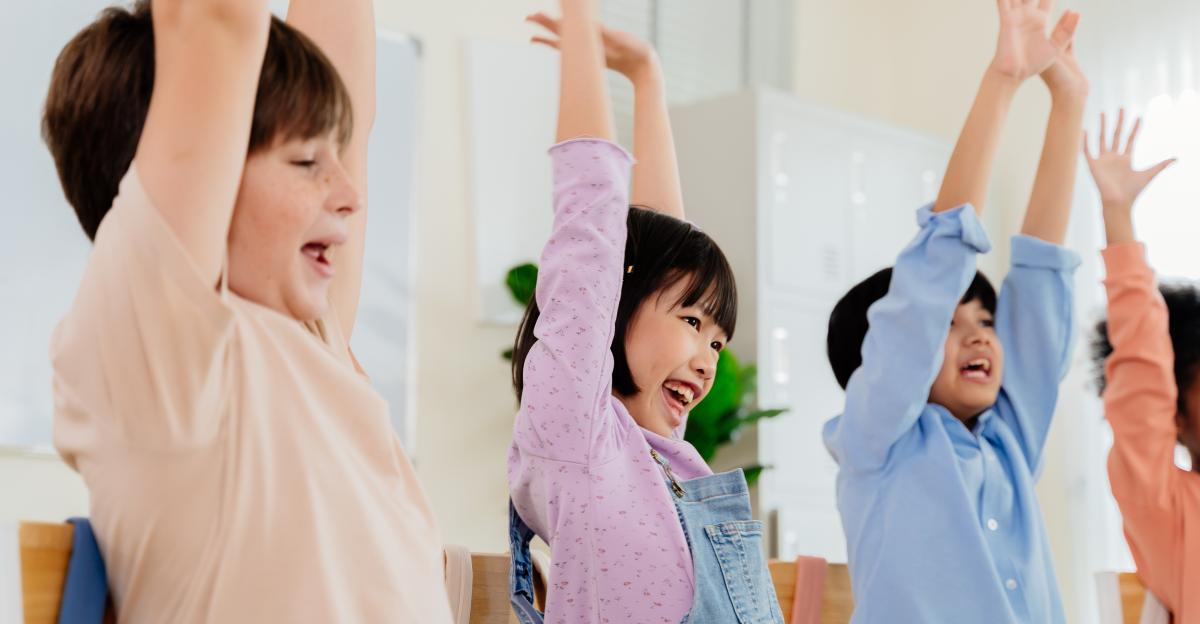
Studies confirm the importance of physical activity for students. Not only does it benefit their physical health, but also because active, fit children do better in school. They have faster cognitive processing speed and perform better on standardized tests. Teachers notice that students can better focus on learning after being active.
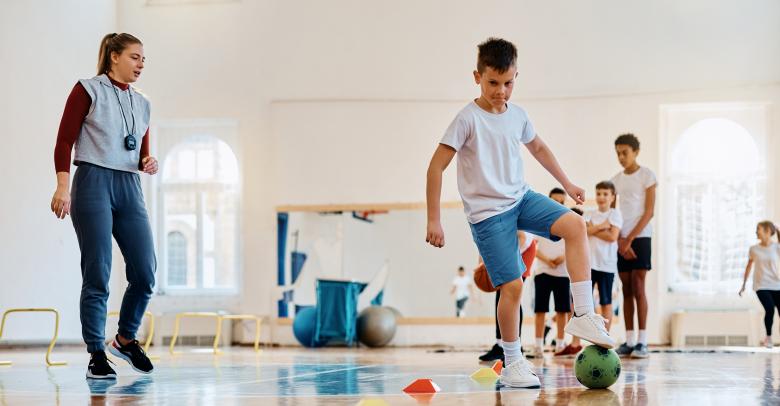
This activity may come in many forms, including recess, running and walking clubs, physical education classes, and activity breaks. There is an increasing amount of evidence that shows that breaking up sitting with some physical activity is a win-win. Not only does the activity benefit students physically and help reduce obesity, but it can also help them academically.
3 Steps to Make Your Classroom More Active
Make an Activity-Friendly Environment
Take a moment to look around your classroom. Is the space inviting for activity? If not, there are many ways you can help to make it more conducive for movement and active learning.
- Get rid of any clutter. Clean areas between desks so it is easy to move.
- Arrange desks in a U-shape to keep the center open for activity.
- If you like grouping desks into small groups, put cut tennis balls on the bottoms of the legs to make them easier to quietly move them around.
- Try using active seating. With these seats, students move their legs and arms and engage their core while participating in class. Some examples are the Standing Desk, Therapy Balls, Ball Chairs, and Active Wobble Seating.
- Display photos of active people around your room and have a space for students to display photos of themselves being active.
- Use music to motivate your movers. A small Bluetooth speaker doesn’t take up much room, can be recharged, won’t blast music too loud for neighboring classes, and can play appropriate and current music you provide.
- Have equipment ready for activities. Having things like juggling scarves, cones for stations, yarn/fluff balls, etc. on hand encourages students to get active.
Make Time for and Schedule Activity
It is recommended that children get 60 minutes of physical activity every day. If your school has daily PE and recess twice daily, they may be getting close to that goal. However, you may not have daily PE, and even if there are two recesses, there is no guarantee all kids are active during that time.
Having activity breaks in the classroom scheduled throughout the day will add up those minutes to help them reach their goal. Aside from adding activity minutes to their day, activity breaks are great for learning. It’s recommended that students get a kinesthetic brain break every 30 minutes or so throughout the day. That may seem like a lot, but research shows that students need to change things up often to help them focus and re-energize for more efficient learning.
How can you make this happen? Here are a few suggestions:
- Set a timer or app for a quiet alarm every 30 minutes. Designate one student each day to be in charge of setting it and choosing some of the activities your class will do.
- Write a list of activities (1-5 minutes) and post it on a wall or board. At the top and bottom of each hour you are in class, do the next activity on the list. Check them off as you go.
- Use a calendar app to remind you every 30 minutes throughout the day to get your students active.
Whatever you do, set aside and schedule time for your activity breaks. Each will last between one and five minutes and will help, not hinder, the learning in your class. Be consistent with this every day throughout the year. You are going to wish you’d started this years ago!
Choose and Lead Fun, Active Breaks
There are all sorts of activities you can do to get your students up and moving. They fall under 2 main categories: Brain Boosters and Anchors.
- Brain Boosters: These are a great way to get your kids up and will change the focus from what they were learning to something totally different. They help to activate and energize students’ brains. Samples of brain boosters might include juggling, doing a short dance, playing rock, paper, scissors, playing non-elimination Simon Says, doing a quick fitness activity, or following a short activity video.
- Anchors: These are an active way to learn academic material. Studies show many students learn better when they use their whole bodies. Kinesthetic learning helps to anchor the knowledge they learn. Examples include:
- Standing and counting, but hopping on one foot when you say an odd number, and jumping on two feet when you say an even number.
- Have students move in and out of a circle to show fractions, decimals, and percentages.
- Students spell using their bodies for letters.
- Students act out cell division with motions for each phase.
Recap: Your 3 steps for a more active classroom are:
- Check out your classroom and make it more activity-friendly.
- Make time and schedule activities every 30 minutes throughout the day.
- Lead fun and active breaks to add activity to their day and re-energize their brains for better learning!

We do jumping jacks and clap hands to multiples up to 12. The smaller the number the more jumping jacks!
That’s a great idea, Pat, and no equipment required! Any way to get students up and moving around (or even seated stretches) can be so beneficial for both their physical and mental well-being. Our latest podcast actually covers this exact subject. If you have a few minutes, give it a listen!
https://blog.schoolspecialty.com/the-schoolyard-podcast-episode-8-healthy-teachers-healthy-students/