Shop Subscribe

  • Facebook
  • Instagram
  • LinkedIn
  • Pinterest
  • Twitter
  • YouTube

Schoolyard Blog | Teacher Resources | School Specialty

Tips and trending topics for the teacher who's always learning

schoolyard-logo
  • Learning Spaces
  • Podcasts
  • Topics
  • Search
  • < Previous post
    Next post >
    4 Ways to Make Early Childhood Spaces Both Fun & Functional

    Early Childhood

    4 Ways to Make Early Childhood Spaces Both Fun & Functional

    The key to setting up a great early childhood room is to strike a balance between fun and function. Everything from furniture and seating to the room layout should work together smoothly to achieve the highest level of learning possible. The following are 4 tips for putting together an early childhood space.

    Table of contents

    • Plan Ahead to Reduce Noise
    • Separate “Messy” Areas
    • Create Clear Paths and Well-Defined Boundaries
    • Choose Multi-Functional Furniture

    Plan Ahead to Reduce Noise

    Managing noise in the early learning environment can be difficult at times. Room setup should include measures to reduce noise where possible. Carpets on the floor and soft seating can absorb sounds. Noisy activities, such as block play, can be located in transition areas or next to other activity areas of similar loudness.

    Separate “Messy” Areas

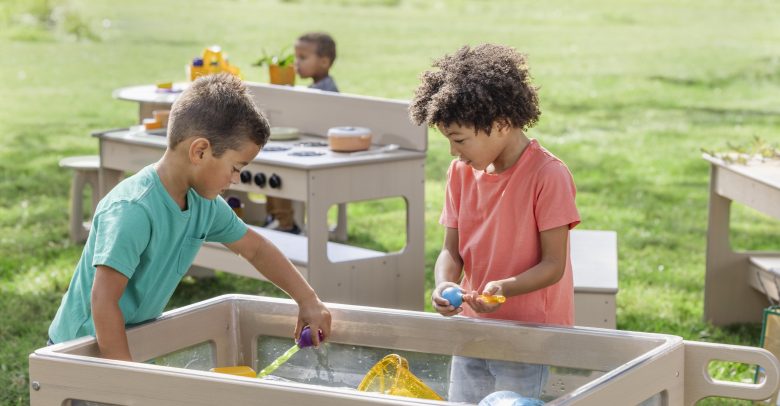
    There should be a distinct area for activities involving paint, sand, water, and other messy materials. Make sure there is plenty of room for this area, that washable surfaces are in place, and that it’s close to a sink or bathroom. Also, determine a space ahead of time where students will store finished art so items that are heavy with paint won’t be carried through other centers.

    Create Clear Paths and Well-Defined Boundaries

    After deciding which learning centers to use, it’s important to clearly define the boundaries of each center. It’s also necessary to ensure the children understand the flow of traffic and the pathways to take. While space is almost always an issue in most learning areas, it’s imperative that each area is clearly separated and there is enough room to play and explore. If children feel uncomfortable or confined, they are less likely to truly engage in the learning process.

    Choose Multi-Functional Furniture

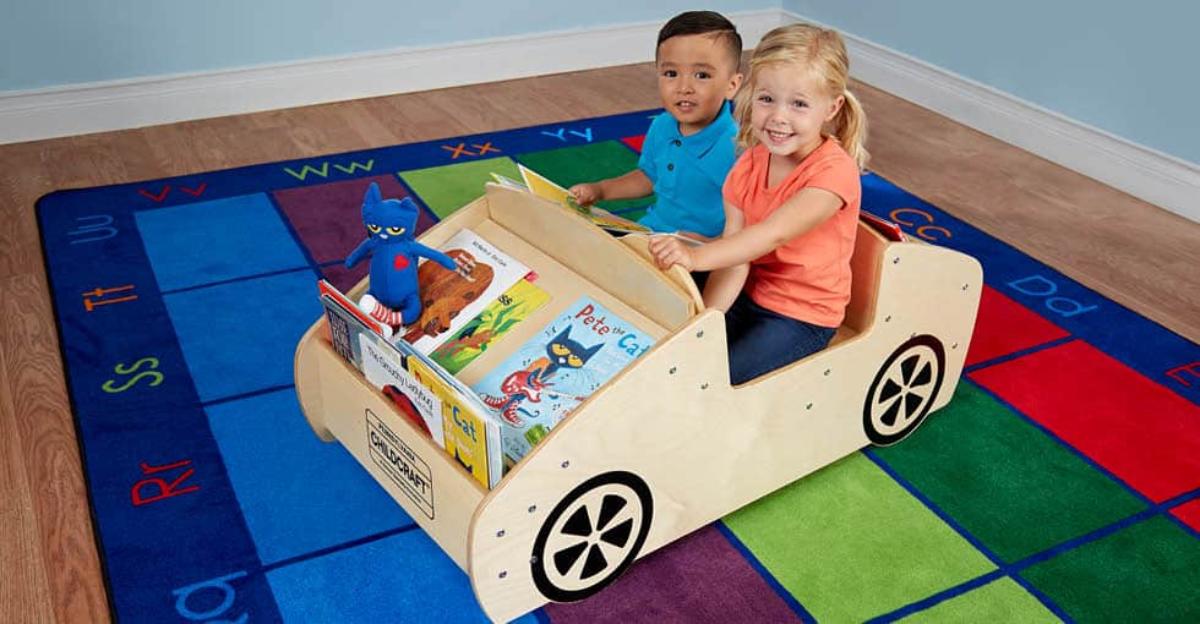
    Classrooms with limited space can greatly benefit from furniture that serves several purposes. Storage units provide easy access to materials for both children and teachers while serving as dividers that delineate specific areas within the room. An easel that combines several functions to take up the least possible space is a good choice for a reading/writing center.

    Recommended

    Predictions for Education Trends in 2026 from an Expert

    Early Childhood

    Predictions for Education Trends in 2026 from an Expert

    6 Budget-Friendly Ways to Refresh Your Classroom Without Breaking the Bank

    School Planning & Organization

    6 Budget-Friendly Ways to Refresh Your Classroom Without Breaking the Bank

    Spark Student Creativity with These Fun Writing Prompts

    Spark Student Creativity with These Fun Writing Prompts

    Books to Help Prevent Bullying: Titles for Every Grade Level

    Books to Help Prevent Bullying: Titles for Every Grade Level

    Explore The Schoolyard

    Education Essentials

    Inspiration & Planning

    Learning Spaces


    TopicsShop Subscribe

    Copyright © 2026 School Specialty, LLC. All rights reserved. Privacy Statement · Social Media Statement · Do Not Sell My Personal Information - CA Resident Only

  • CATEGORIES

    • Learning Spaces
  • TOPICS

    • Arts & Crafts
    • Early Childhood
    • Special Needs
    • Physical Education
    • Educational Technology
    • Classroom Management
    • STEAM & STEM
    • Reading & Literacy
    • Teacher Life
    • Celebrations & Seasons
    • News
    • Math
    • Science
    • Podcasts
    • Topics
    • Shop
    • Subscribe
    • Facebook
    • Instagram
    • LinkedIn
    • Pinterest
    • Twitter
    • YouTube