

Character education is an important concept that embraces the emotions of students as a tool in their learning. It has broad implications in various academic subjects, but more importantly, it leads students to develop healthier identities and manage their emotions. That foundation is critical for academic success in everything from math to PE, but the way to approach this can differ from subject to subject. So how can teachers implement character education practices in science?
How Emotions Impact Learning
The underlying reason for the success of character education in schools is that learning is more easily absorbed and remembered when a student has an emotional connection to the subject matter. In his paper, Social Emotional Learning through Active Science, Dr. Kenneth Wesson discusses the importance of that connection in the science classroom.
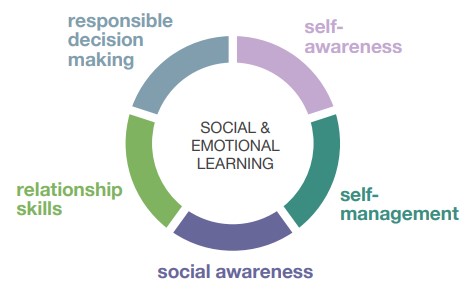
CASEL’s Five Core Competencies
The five core competencies CASEL has outlined encompass both interpersonal and intrapersonal growth, as well as the result of developing these skills.
The first four include the intrapersonal dimensions of self-awareness and self-management, and the interpersonal of social awareness and relationship skills. Developing these competencies together leads students to the fifth competency—responsible decision-making.
Active Science Learning
The importance of character education is evident in all academic subjects, but science has the unique potential to guide students in their social and emotional journey by leveraging the broad spectrum of experimentation offered by the many fields of science.
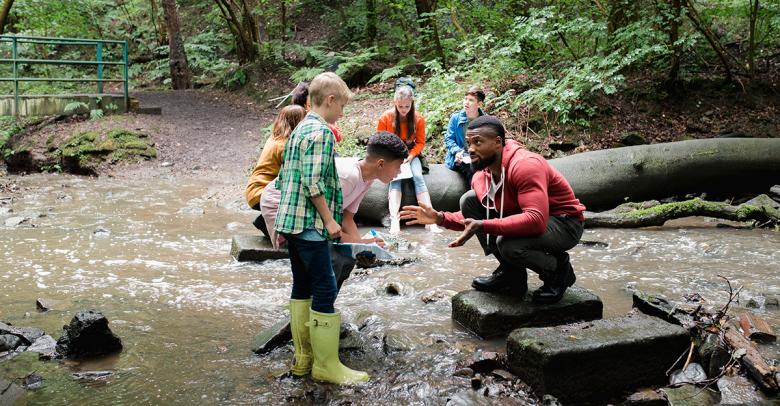
Hands-on science investigations engage students in active science learning, allowing them to establish an emotional connection to their work. Dr. Wesson observes, “Each of the five competencies can be immediately observed in action during hands-on science investigations and engineering challenges.”
The Importance of Collaboration
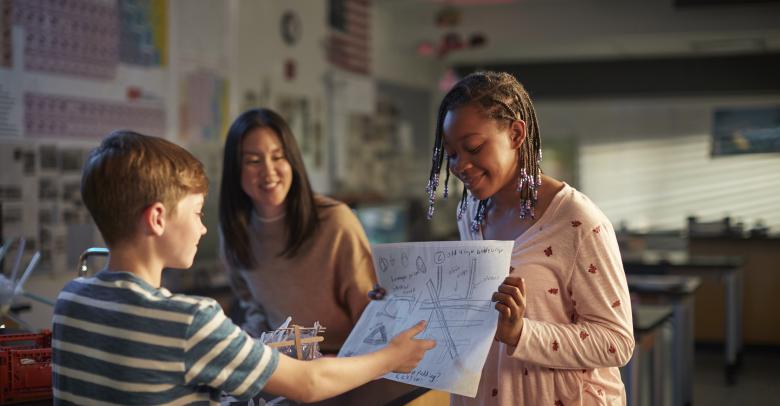
Dr. Wesson further points out that students work better when collaborating with their peers and teachers. Through collaboration and socialization in the science classroom, students engage all five core competencies of SEL as they “begin the learning experience together at the same point” and “work collectively towards the same goal or objective.”
Throughout the collaborative process of an active science investigation, students will communicate and celebrate findings, provide feedback, prepare to support their conclusions, revise their conclusions, self-evaluate their successes and shortcomings, and reflect on ways to improve.
How FOSS® Supports SEL in the Science Classroom
FOSS is the Full Option Science System developed by UC Berkeley’s Lawrence Hall of Science. The FOSS program is built around exploration and active science investigations. The correlation between active science learning and SEL is one of the reasons FOSS has been used by 100,000 teachers for 3-1/2 million students in all 50 states.
The success of FOSS is rooted in providing every child the opportunity to develop their ability to think scientifically. This is accomplished not through a digital program or textbook but through a multisensory experience that engages all learners. Through active science learning, students develop skills and memories they will carry with them as they navigate to and through their adult lives.
At its core, formal education exists to equip students for life and for their chosen careers. But this preparation goes beyond the subject matter itself. Yes, we want students who are well educated, rational thinkers, and problem solvers. But we also need citizens who are emotionally competent, caring, and socially conscious decision makers.
Dr. Kenneth Wesson


Leave a Reply