
When students are healthy, happy, and physically active, research shows they perform much better academically—and learning healthy habits at an early age can set them up for a lifetime of success.
Table of Contents
While PK-12 leaders are rightly focused on the well-being of their students, staff health and wellness are just as important for student success. Teachers can’t focus on helping their students unless their own mental, physical, and emotional needs are met—and staff wellness is also a key strategy for boosting teacher recruitment and retention.
School districts can support the well-being of their students and staff by designing and furnishing learning environments with health and wellness in mind. With the right approach, PK-12 leaders can create and equip classrooms, lounge areas, and other school spaces in a way that enhances, rather than inhibits, wellness for everyone.
The Importance of Wellness for Student and Teacher Success
As the Centers for Disease Control and Prevention (CDC) observes, research demonstrates that students who are healthy and physically active tend to have better grades and attendance at school. They’re able to focus on instruction more effectively and exhibit less time off task.
Mental health is as critical to students’ success as their physical health. Students’ mental health affects their ability to focus, learn, manage stress, and form positive relationships, among other areas. Stress and anxiety aren’t just high among students. Many educators also suffer from these conditions, and it’s hindering the ability of school systems to recruit and retain highly qualified teachers. In fact, new research suggests that the teacher shortages many districts have experienced are continuing to worsen. As we shift our thinking toward interactions and supports that can be given to students and teachers, we are moving our thinking from a trauma to triumph mentality.
Supporting teacher wellness is a key strategy for reducing attrition rates and improving teacher retention. Nearly three out of four teachers say they experience frequent job-related stress, and 59 percent say they’re burned out. K-12 leaders can minimize this stress by creating a positive and healthy working environment for their teachers.
How Learning Environments Can Enhance Wellness
The physical design of a learning environment can have a profound effect on both student and teacher well-being. Here are five key strategies for designing learning spaces that are warm and welcoming, and foster improved wellness for everyone.
Design School Spaces for Maximum Comfort and Engagement
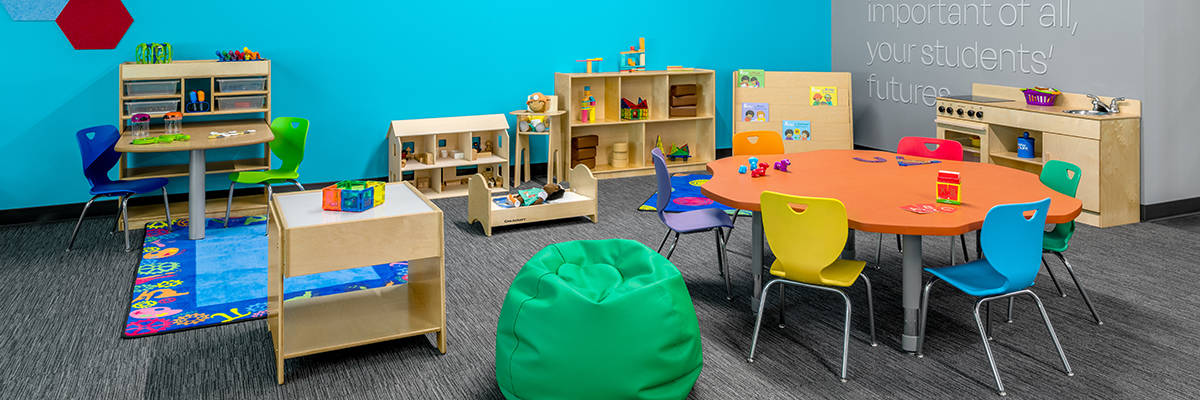
When students are physically comfortable and have the supplies that they need, they can relax and focus on instruction more effectively. To ensure students can work comfortably, tables, desks, and chairs should be ergonomically designed and age-appropriate. One way to promote physical comfort is to use adjustable furniture where possible. For example, the height-adjustable Tilt-N-Nest® desks from Classroom Select® help to create a more comfortable learning environment for students by letting them easily raise or lower their desks to a height that works best for them.
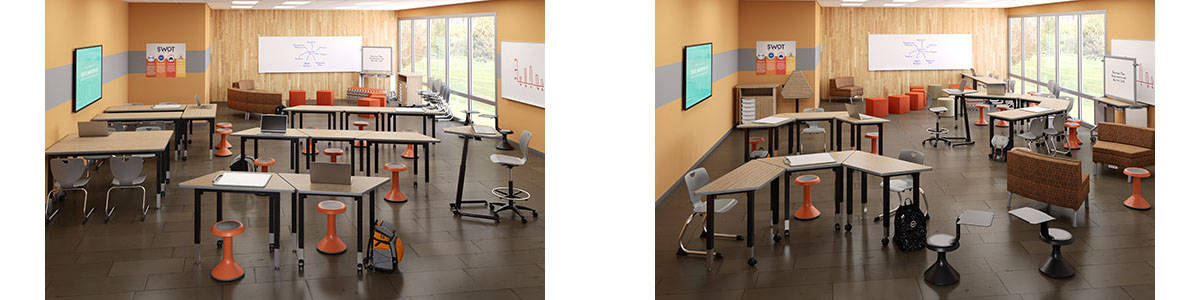
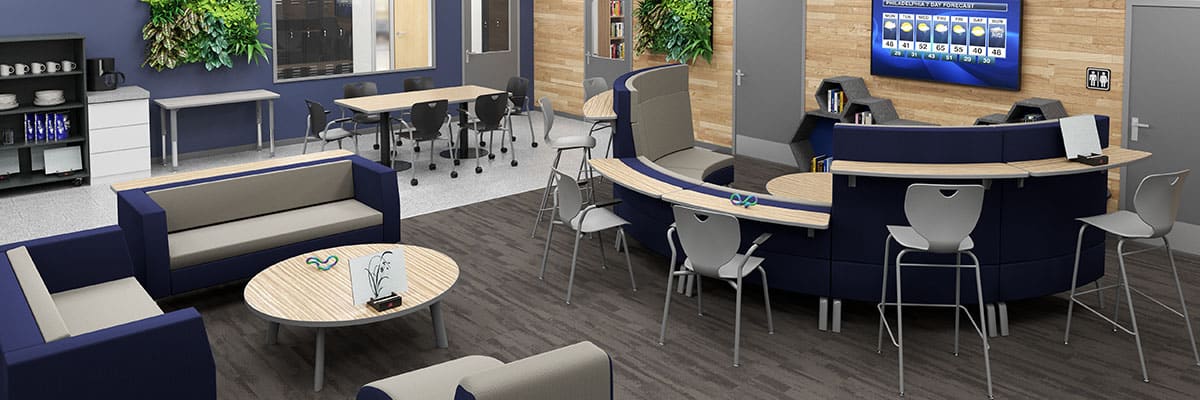
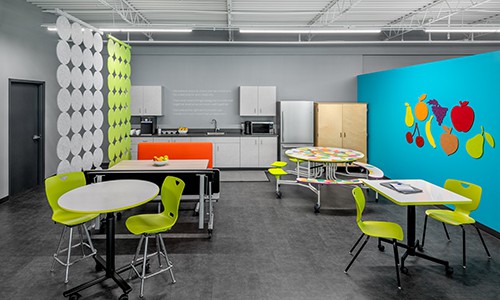
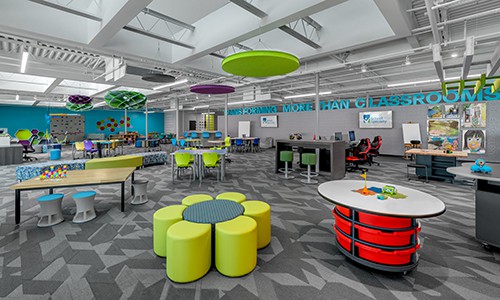
Another way to ensure comfort is to give students plenty of seating choices. Providing a variety of seating options—including not only class desks or tables but also soft seating options, bistro-style chairs and tables, and even standing desks—empowers students to choose an option that works best for them. It allows students to “find their place” where they’re most comfortable within the classroom, which can help promote a sense of psychological safety and security.
Teachers deserve comfortable seating options as well. Providing a comfortable place for teachers to relax, reconnect, and recharge goes a long way toward establishing teacher wellness. For instance, provide soft seating and other comfortable furnishings in teachers’ lounges. Give educators plenty of seating styles to choose from, including individual lounge chairs, rockers, couches, and tables. That way, teachers can find seating that works best for their needs in the moment.
Use Flexible Furnishings That Encourage Movement and Connection
Social connection is an important aspect of wellness. “Social connectedness influences our minds, bodies, and behaviors,” the CDC writes. “Research shows that social connectedness can lead to longer life, better health, and improved well-being.”
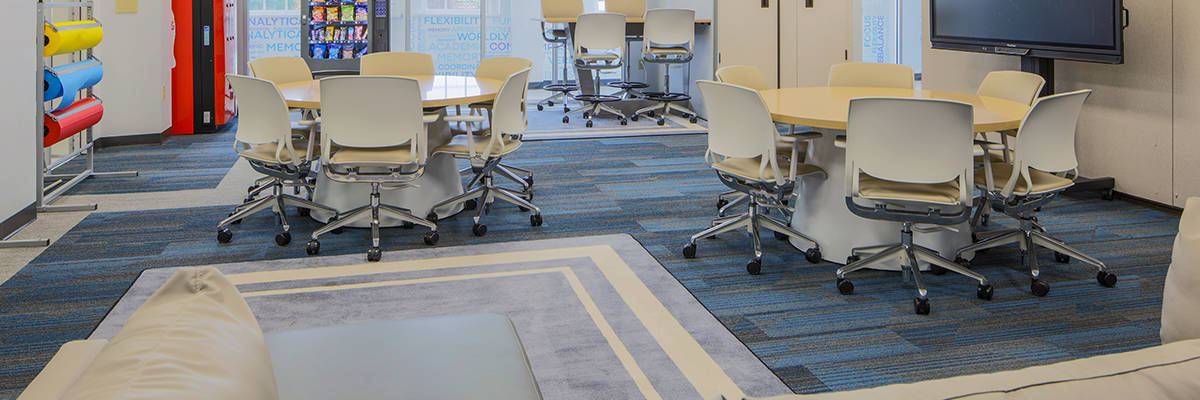
Flexible learning environments with movable furniture that can be configured easily to support various group sizes and activities make it simple for students to work together to complete tasks and projects. This, in turn, can help forge stronger social connections between students.
Flexible furnishings also allow for students to move around easily. When furniture is on casters, it can be shifted around to create wide, open spaces that accommodate larger group activities or let students take frequent “movement” breaks from their lessons.
This idea is supported by research. A team of Australian researchers examined eight primary and secondary schools in that country and concluded that flexible learning spaces increased student well-being by enhancing the students’ comfort, movement, and connectedness.
For instance, the researchers found that flexible learning spaces encouraged more active group learning and movement, which was beneficial to students’ physical and emotional well-being. One student was quoted as saying, “We get to move a lot, and that’s really comfortable because you’re not always sitting.” Another student said, “I think I’ve made more friends with the group work. I know we’ve been in the same school for about three years, but with the group work, you become a bit closer.”
Integrate Calming and Soothing Elements Into the Design of Learning Spaces
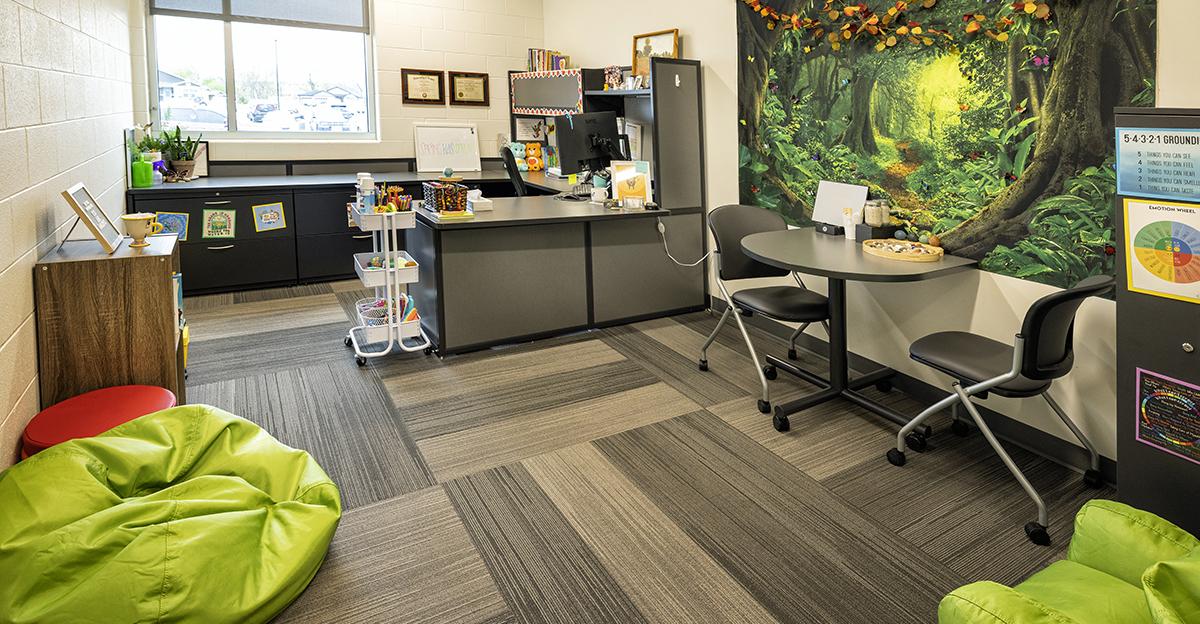
Furniture and equipment that allows students to rock, stretch, and move can help them calm down, manage stress, and regulate their emotions. For instance, self-soothing furniture such as fidget stools can help students effectively manage their behavior, while bubble tubes, fidget devices, and other sensory objects can help relieve stress as well.

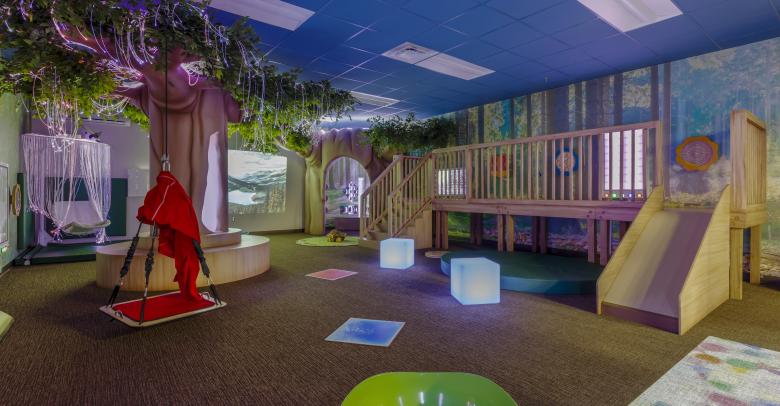
Learners who find themselves over-stimulated might need some time to decompress. This is why a growing number of schools are adding quiet spaces or “chill zones”—separate areas of the classroom that are available to students who need some downtime. For instance, these “privacy pods” from Classroom Select give students a quiet space in which to retreat by themselves or work in pairs. Many schools are even creating entire “sensory rooms” for students who need a place to relax.
Include Proper Lighting, Acoustics, and Ventilation
Environmental factors such as lighting, acoustics, and air quality should be at optimum levels for learning and well-being. For instance, schools should incorporate natural lighting wherever possible and avoid using fluorescent lights; instead, choose warmer, recessed lighting sources. If replacing bulbs or light fixtures isn’t feasible, light filters provide an affordable option for softening classroom lighting.
Active learning environments can be somewhat noisy. Instead of sitting in their seats and listening to the teacher talk, students are moving around and talking with their peers. The noise this creates can make it hard for some students to focus, and it can have long-term effects on their health and well-being. Noisy classroom environments can affect teachers’ health as well, such as by causing vocal strain as teachers try to make themselves heard above the din.
Sound-absorbing acoustic panels cut down on ambient noise in classrooms and other learning environments. Conversely, some spaces may need sound amplification systems to help students hear instruction more effectively while reducing strain on teachers’ vocal cords, especially in larger group settings.
Proper ventilation is also essential for keeping everyone healthy and reducing the transmission of airborne viruses. Portable air purifiers and classroom air filtration systems can ensure clean, healthy air within learning environments of all sizes.
Promote Good Hygiene
Providing portable sinks, hand sanitizer stations, and other convenient options for students and staff to wash their hands and remove germs can encourage proper hygiene. Pre-packaged hygiene kits can also promote healthy habits among students.
Students can’t learn effectively if they’re not healthy physically, mentally, or emotionally—and they also can’t learn if their teachers aren’t feeling well. As K-12 leaders look for strategies to enhance student and staff wellness, the design of classrooms and other school spaces plays a key role in supporting the well-being of everyone.
Download the full article here

Dr. Sue Ann Highland is the National Education Strategist for School Specialty. As an Education Strategist, she uses her expertise in educational initiatives and administrative leadership to help teachers and leaders to transform teaching and learning.
In addition to her work at School Specialty, Highland has also served as a change and improvement consultant to more than many Colorado business and educational institutions since 2004. In this capacity, she enhanced personnel performance, streamlined organizational operations and introduced process improvements that enhance productivity for companies and schools. She also has several years experience in managing a team that transforms learning environments for districts.
Highland derives her expertise from over 25 years in education, with half of those years in rural districts. She has worked as an Organizational Development Director, an elementary school principal and a school district’s Director of Federal Programs, Curriculum and Instruction. In these positions, Highland was responsible for professional development and daily management as well as for leading initiatives and evaluating staff performance and results. She specializes in improvement, turnaround, and change management.
Highland received a Master of Arts in Educational Leadership and Policy Studies from the University of Northern Colorado and a Ph.D. in Industrial and Organizational Psychology from Grand Canyon University.
References
- Centers for Disease Control and Prevention, “Student Health and Academic Achievement.” https://www.cdc.gov/healthyyouth/health_and_academics/index.htm
- Fedewa AL, Ahn S. The effects of physical activity and physical fitness on children’s achievement and cognitive outcomes: A meta-analysis. Research Quarterly for Exercise & Sport. 2011;82(3):521–35.
- Kariippanon, K.E., Cliff, D.P., Lancaster, S.L. et al. Perceived interplay between flexible learning
- spaces and teaching, learning and student wellbeing. Learning Environ Res 21, 301–320 (2018). https://doi.org/10.1007/s10984-017-9254-9
- Suldo, S. M., Gormley, M. J., DuPaul, G. J., & Anderson-Butcher, D. (2014). The impact of school mental health on student and school-level academic outcomes: Current status of the research and future directions. School Mental Health: A Multidisciplinary Research and Practice Journal, 6(2), 84–98. https://doi.org/10.1007/s12310-013-9116-2



Leave a Reply