

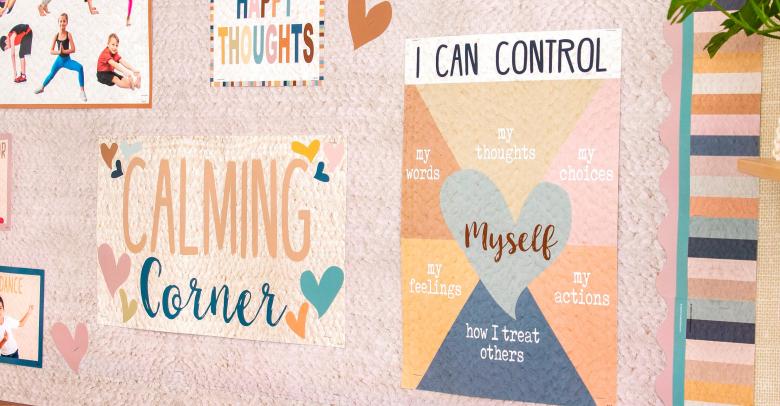
Social-Emotional Learning (SEL) is quickly becoming a cornerstone of education, and the inclusion of students with special needs is increasingly important. Central to SEL’s effectiveness is its application in a learning environment designed to foster a sense of well-being in students. They should feel safe and secure, and thus ready and willing to learn.
This is no less the case for students with special needs. To illustrate, let me step you through some examples of how one SEL competency, self-management, can be instilled in students with special needs through simple yet effective classroom enhancements.
Understanding Sensory Processing as Part of SEL
Social Emotional Learning (SEL) is defined as “a process for helping children gain critical skills for life effectiveness.” This includes concepts such as developing positive relationships, behaving ethically, and handling challenging situations effectively (AOTA SEL Info Sheet). The Collaborative for Academic, Social, and Emotional Learning (CASEL) further identifies Five Core Social and Emotional Competencies as part of their framework and mission to “help make evidence-based social and emotional learning (SEL) an integral part of education from preschool through high school.”
Shop All Social and Emotional Learning Resources & Tools
For many students, especially those with special needs, the competency of Self-Management (the ability to regulate emotions and behaviors, including managing stress and controlling impulses) is challenging to implement. They may be over- or under-responsive to touch, movement, sights, or sounds. As a result, their sensory systems may need adjustment before they can take on more complex cognitive and emotional tasks, such as problem-solving and responding appropriately to peer interactions.
Sensory Systems that Impact Self-Management
Below are some of the main sensory systems that may have the most impact on Self-Management:
Vestibular: Movement sense and the relationship of our bodies to gravity
Movement can be used for calming or alerting, such as a baby who is calmed by gentle linear rocking. Or a student who stays alert during class by wiggling in a seat or swinging and tapping a leg or foot. An Egg Chair Swing or Core Disk Cushion is a good example of a sensory option to meet vestibular needs.
Tactile: Touch sense from our skin receptors
Some children are oversensitive to touch and become defensive to input from sand and water tables or finger paints. Other students seek extra touch input, so they often have trouble keeping their hands to themselves or tend to chew on inappropriate items to help stay focused and calm. We offer a sensory buffet of items from our Abilitations brand to provide that just right touch input for each child, including fidgets and oral motor chewable products.
Proprioceptive: Information from receptors in muscles and joints that helps with body awareness
Deep touch pressure (like a massage) and heavy work activities (such as carrying bags of groceries) activate this sense, which may also help with self-regulation and calming. Many students need extra input in this area to help them define where their bodies are in space. For example, the child who deliberately crashes or bashes into furniture or other children (NOT good self-management!) or the student who uses their hand to trail along the wall during a busy hallway transition. Abilitations solutions like the Kordy Weighted Giraffe for younger children, or weighted products from Covered in Comfort for older students, offer discrete options for providing extra heavy work input. This can help calm during busy transitions or during circle and study time.
Visual/Auditory: Sights and sounds
Children with SOR (Sensory Over Responsivity) may be easily overwhelmed by sights and sounds in the classroom. Fluorescent lights can cause excess glare, while background noises like an HVAC fan, a computer, or shuffling papers and classroom chatter may feel like a bombardment on their auditory system. This can lead to withdrawal and isolation or escalation in the form of aggressive behavior. Solutions like Cozy Shades for overhead lights or Vibes Earbuds for sound reduction may help promote better choices in self-management by reducing the incidence of sensory overload.
Learn More About Sensory Tools
To learn more about sensory processing and our solutions, check out our website for sensory processing tools.
Shop All Early Childhood Sensory Processing

Cecilia Cruse
Cecilia Cruse, MS, OTR/L has a BS degree in Occupational Therapy from the University of Florida, and her Master’s degree in Education from Georgia State University. She is SIPT certified and has over 25 years of experience in pediatrics with school-based services, acute care, and outpatient pediatric settings.


Leave a Reply