

If you’re reading this in early August, chances are you’re already thinking about bulletin boards, name tags, and that first week of routines. And if you’re reading this during any other time of the year, you’re probably just trying to make it to summer vacation in one piece. Either way, let’s talk about burnout, because it’s real, and it doesn’t just show up in us. It shows up in our classrooms too.
You’ve probably heard of the Reggio Emilia philosophy, which describes the classroom environment itself as the “third teacher.” The idea is that a well-designed space can support learning, calm, and connection just as much as we can, or as much as a child’s family can. What’s less talked about is that this same principle works both ways. A classroom that’s calming for kids is calming for the adult standing in front of them all day too. So this year, instead of adding one more thing to your plate, consider a few small shifts to your space that can help everyone breathe a little easier, you included.
Here are three simple, low-lift ways to fight burnout by leaning into your classroom as a teacher in its own right.
1. Bring the Outdoors In
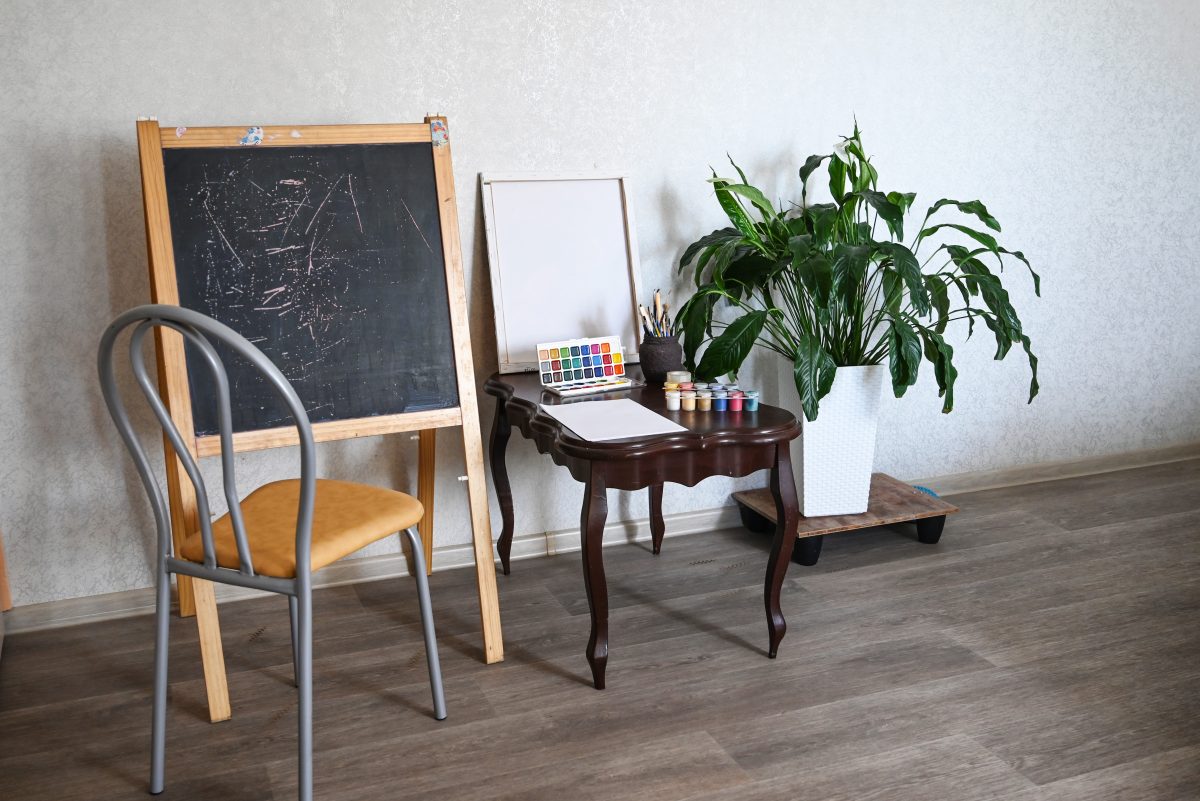
There’s a reason we all feel a little lighter after a walk outside. Natural environments genuinely lower stress, and you don’t need a courtyard or a garden bed to bring some of that benefit into your room. A few plants on a windowsill or shelf can do more for the mood of a space than you’d expect. Pothos, spider plants, and snake plants are nearly impossible to kill, which matters when you’re already juggling forty other things.
Beyond live plants, look for ways to weave in natural materials throughout your room. A basket of smooth river rocks, a jar of shells, a bundle of dried flowers or eucalyptus, a few pieces of driftwood or bark. These items are wonderful for sensory bins and quiet exploration tables, but they also just soften a room visually in a way that laminated posters never will. Swap out some of your classroom art for nature photography or botanical prints. Even a simple corkboard of leaves your students collected on a nature walk counts. The goal isn’t a full room makeover. It’s creating little pockets of calm that your eyes can land on throughout the day, for you and for your students.
2. Experiment With Aromatherapy
Scent is powerful. It’s tied directly to memory and mood, which is why the smell of a certain candle can transport you straight back to your grandmother’s kitchen. You can use that same power intentionally in your classroom to help create a calmer atmosphere during transitions, quiet work time, or those inevitable moments when the whole room feels a little wound up.
Lavender is the classic choice for calming and relaxation, and it’s a gentle place to start. Chamomile works similarly and pairs nicely with a cozy reading nook. Citrus scents like orange or lemon tend to lift mood and energy, which can be great for those sluggish post-lunch stretches. Peppermint can help with focus during independent work. You don’t need a diffuser humming all day. A small sachet, a scented sticker on a cotton ball tucked in a corner, or a lightly scented playdough can be enough.
One important note here, and please don’t skip this step: check your school’s fragrance policy before you bring any scented products into your classroom. Many schools have gone fragrance free entirely due to allergies, asthma, and sensory sensitivities among staff and students, and some districts have specific rules about what’s allowed. A quick email to your building administrator or school nurse can save you a headache later, so make that your first move before you start shopping for essential oils.
3. Cultivate an Attitude of Gratitude
This one costs nothing but a stack of sticky notes, and it might have the biggest payoff of all three. Building a regular gratitude practice into your classroom routine helps students learn to notice the good things around them, and honestly, it does the same for us. It’s hard to stay stuck in a stressful headspace when you’re actively reading a stack of notes from seven-year-olds thanking you for helping them tie their shoes.
There are a few easy ways to build this in. Set up a gratitude bulletin board where students can pin a note any time something good happens, whether that’s a friend sharing crayons or a fun science experiment. A gratitude jar works well too, especially for younger students who love the physical act of dropping a folded slip of paper into a container. Once a week, or even just on rough days, pull a few out and read them aloud. You can also fold gratitude into circle time by asking each student to share one thing, big or small, that they’re thankful for that day. It doesn’t need to be profound. “I’m thankful for tacos” is a perfectly good answer, and it still counts.
What makes this practice so effective against burnout is that it retrains attention, both theirs and yours. Teaching is full of moments that don’t go as planned, and it’s easy to end a day only remembering the chaos. A regular gratitude habit builds a counterbalance. Over time, you and your students start noticing the good stuff as it happens, not just after someone points it out.
Small Changes, Real Relief
None of these ideas require a grant, a weekend of DIY projects, or a trip to a specialty store. A few plants, a mindful approach to scent, and a simple habit of noticing what’s good can shift the whole feel of your classroom. And since your classroom is working alongside you as that third teacher, taking care of the space is really just another way of taking care of yourself. This year, give yourself permission to start small. Your future self, standing in that room in April, will thank you.




Leave a Reply