
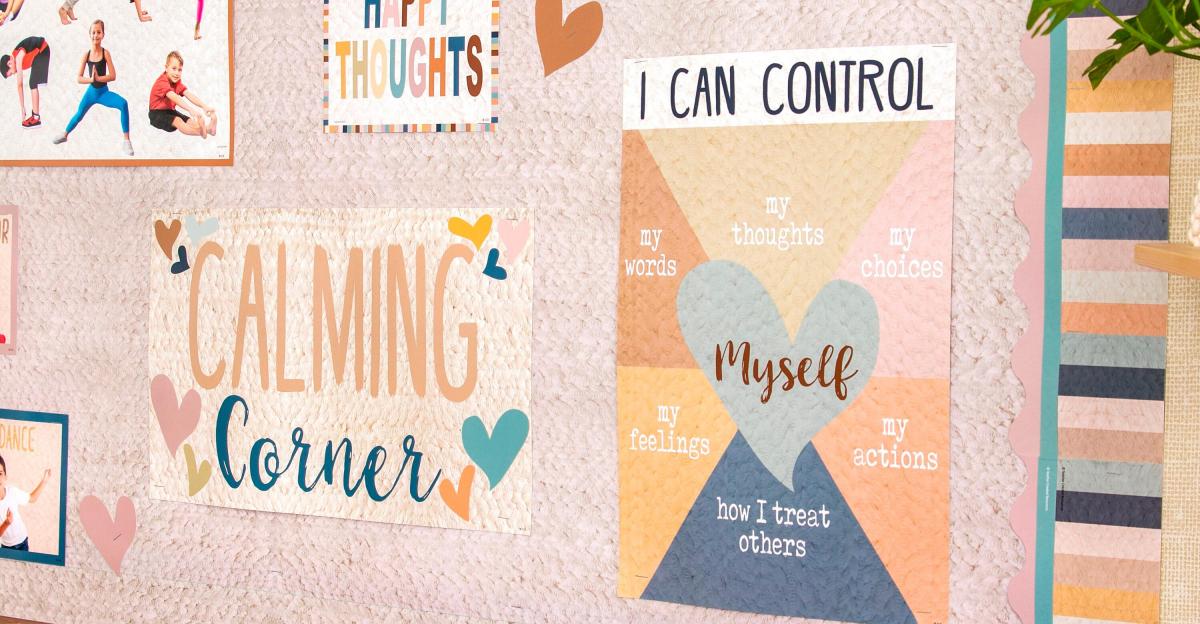
Self-management doesn’t come easy to many children, especially those with behavioral and emotional issues. And for some students, the noise levels, social interaction, and sensory input they experience during the school day can feel overwhelming. Like adults, students sometimes need some space to calm themselves. You can offer your students this respite when they need it and a space to decompress with a calming corner in your classroom.
What is a calming corner?
Calming corners can take many forms. In general, they are an area in your classroom that reduces stimuli and is equipped with comfortable furnishings and tools to help children identify and manage their emotions.

Benefits of a calming corner
Learning social-emotional skills like self-management has many benefits for students, including helping them focus on academics. Here are just a few of the reasons calming corners should be an essential part of your strategy for teaching social-emotional skills:
- It’s inclusive: Although you can create a calming corner in any area of the school, such as the library or counseling office, when you create one in your classroom, your students can continue to be a part of the learning environment even when they need to cool down. This ensures that self-management isn’t treated as a punishment but rather as a normal way to deal with emotions.
- It rewards positive behavior: A well-created calming corner will be a place where students feel safe to escape to and enjoy. In this way, managing their emotions is treated as a reward, which reinforces this positive behavior and essential social-emotional skill.
- It builds skills: The more tools kids have in their social-emotional toolbox, the easier it is for them to control their emotions and impulses in stressful situations. Implementing a calming corner allows students to practice these skills in a safe space so they can be prepared for any situation.
Creating your calming corner
Your calming corner doesn’t have to be fancy or expensive. Here are some key things to think through when you start planning.
1. Consider comfort
Sometimes the ability to physically shift and relax their body can help a student focus. Start by choosing an out-of-the-way area of the room that you can partition off for privacy. Then furnish it with a soft rug and cozy elements, such as a beanbag chair and some pillows. A comfortable space gives students a place to relax, take deep breaths, and let their body loosen up.
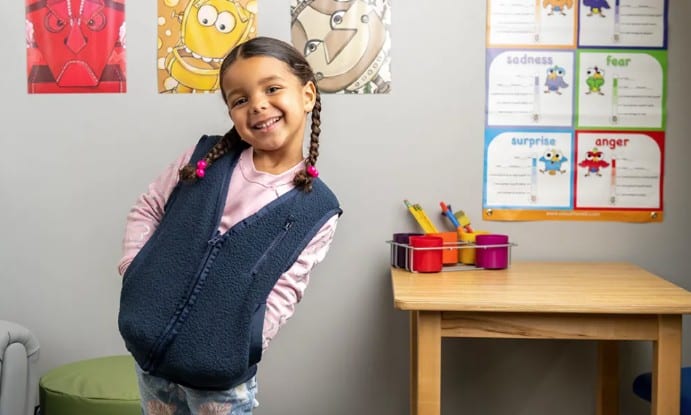
Weighted blankets and other weighted materials also help reduce anxiety. Provide a blanket, vest, or a weighted animal friend in your calming corner to help reduce students’ worries and fears.
2. Help students identify emotions
For younger students, it starts with learning about all the different types of emotions they can experience. Once they can put a name to those emotions, they can identify, understand, and process them.
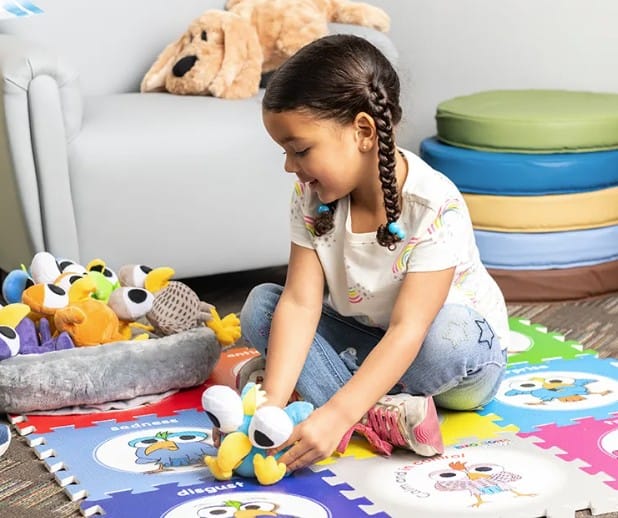
Help students identify emotions, understand what types of things trigger them, and use techniques to manage them. After working on identifying emotions in the classroom, provide notebooks or manipulatives in your calming corner to help students do emotion check-ins, and feature comforting elements like a plush companion.
You can also hang posters that remind students of calm-down strategies they can use when they are feeling frustrated or overwhelmed.
3. Channel the senses
Some students need something to manipulate, see, or smell to help them refocus their minds and get ready to return to learning. Here are some ways to engage all the senses:
- Active seating, such as a ball chair or a rocking stool, can help students expel excess energy.
- Fidget tools give hands something non-destructive to do. Students can twist, turn, tug, and rub these sensory tools to help quiet their minds.
- Biophilic elements have soothing benefits. Incorporate some plant life into your space if you can, or bring in natural calming elements, such as a desktop aquarium.
- Sensory liquid sets offer students a soothing visual distraction.
- Coloring or working with clay or other materials can help students express their emotions through art and give them a relaxing project to focus on.
4. Reduce sensory stimulation
Too much noise, light, or visual distraction can quickly overwhelm children, especially those with sensory issues. Your calming corner can help students cope by reducing external stimuli. Try these effective tools:
- Visual barriers: Use freestanding barriers or curtains to create barriers around your calming corner, which offers a sense of privacy and reduces visual stimulation.
- Noise-canceling headphones: Cut down on the amount of noise students experience.
- Light-reducing filters: Reduce the glare of fluorescent lights and produce a serene atmosphere.
- Black-out tent: Give students the ultimate respite with a tent that reduces sensory input.

5. Think through your calming corner procedures
Before you start using your new space, you’ll want to think through some of the procedures you’ll use.
- How will students know you would like them to go to the calming corner?
- How can students signal you that they need to use the space?
- Will you have a set time limit? If so, do you have a way to visually represent the time for students, such as a sand timer?
- How should students act when another student is using the space?
- How will you handle students who aren’t using the space properly or are abusing the space?
- How will you handle students who are overusing the space (perhaps by providing time-out tickets for a set number of uses)?
6. Remember to practice, practice, practice
After you create your calming corner, be sure to model the procedures for using it. Role-play situations and show students how to act when they need to use the space. You’ll also want to talk about how the rest of the class should act when they see a student using the space. Involving students in setting the rules for your calming corner will help them feel more invested in making sure the rules are followed.
Last but not least, have your students help you choose a name for your calming corner that helps them feel the space belongs to them.


Leave a Reply