
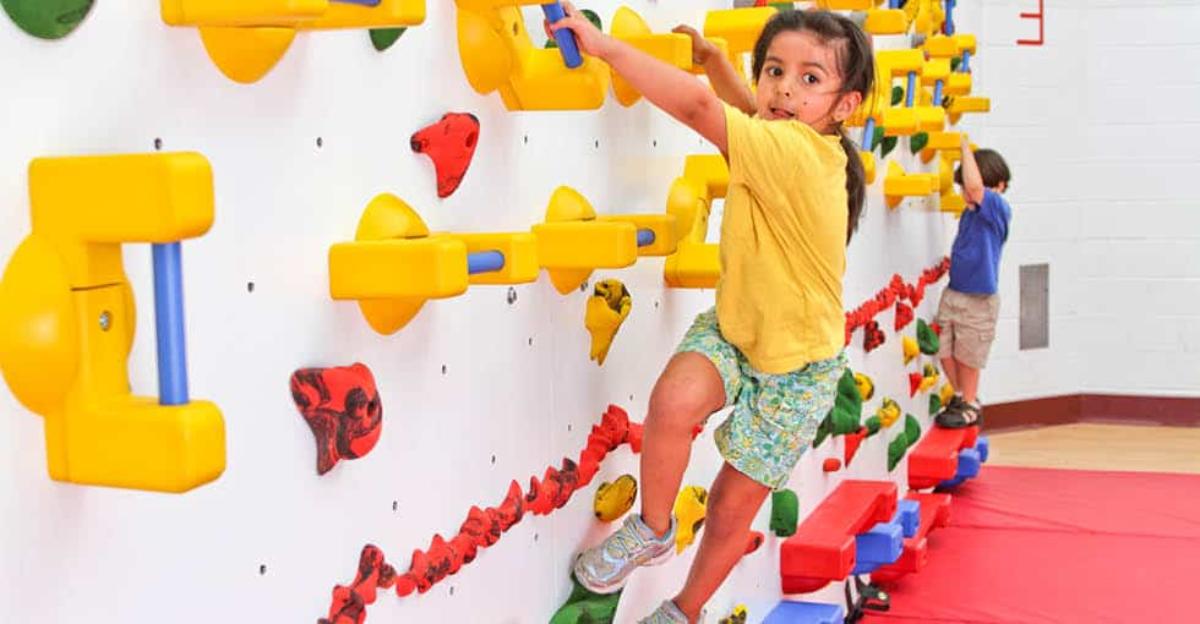
Rock climbing is a physically demanding activity that requires concentration, motor planning, and sequential thought, among other skills. Full inclusion of children with physical limitations or cognitive and sensory processing deficits can be challenging. However, children with special needs can reap many benefits offered by this appealing activity.
4 Ways a Rock Wall Can Benefit Students with Special Needs
Whether a physical, cognitive, communication, or sensory disability, there is a degree of participation that can be achieved. Some of the many benefits of rock climbing as they relate to certain disabilities are described below:
Sensory Disabilities
- As children climb, they gain exposure to movement and sensory input that can support motor processing.
- Climbing provides children with proprioceptive input (the sense of body awareness and movement in relation to joints). The pressure they feel in their muscles and joints can help with internal regulation.
- Climbing helps develop the vestibular system.
- Rock climbing is a very tactile activity.
- The climbing wall is visually inviting and may motivate children to climb, encouraging increased movement.
Physical Disabilities
- Core strength and muscle tone are positively affected by climbing.
- Strength in hands, arms, and legs can increase by climbing.
- Children with physical limitations often engage in sedentary activities. Climbing, at whatever physical level possible, provides body movement that can increase circulation and assist in digestion.
- Range-of-motion activities can increase flexion and extension, helping prevent muscle atrophy.
- Climbing helps children gain experience and confidence in bilateral movement and coordination.
- Eye-hand and eye-foot coordination is practiced.
Cognitive Disabilities
- Action concepts such as on/off, up/down, right/left, and go/stop can all be incorporated into climbing. This helps children learn and understand these words because they experience them verbally and kinesthetically.
- Problem-solving is naturally incorporated into climbing as children determine hand and foot placement throughout the climb.
- Decision-making is involved as children will be faced with choosing a particular path and following through with their decisions.
- Facing the climbing wall and constantly scanning it for the next hold to reach for can help reduce distractions and increase attention. This also helps children think sequentially.
- Children are better able to focus and attend to cognitive tasks after using their whole bodies in an activity.
Communication Disabilities
- Receptive language can be targeted as children listen and process verbal direction by a teacher or another child, for example, which color hand to hold to reach for.
- Receptive language further develops as children talk to each other while climbing, helping them know where they are in relation to others. This is especially important for children who have visual impairments.
- Climbing allows for independent movement. Children who have autism may not like physical contact, and this is an activity that caters to that characteristic.
- Cross-curricular activities invite written communication; for example, by finding letters or spelling words on the climbing wall.
The Adaptive Wall was developed to help children of all abilities reap the benefits of climbing. It features a smooth, white, dry-erase, magnet-accepting surface that can be written on and holds magnets. This allows for learning opportunities for children with cognitive or communicative disabilities. The Adaptive Holds include grab-bar-style handholds and ledge-style footholds to provide stability and extra support for children with physical disabilities. The color-coded Groperz™ Hand Holds offer a variety of additional options for climbers to use as they travel across the Traverse Wall. The following activity for an Adaptive Wall combines literacy and physical activity for children of all abilities.
Adaptive Rock Wall Activity: Alphabet Soup
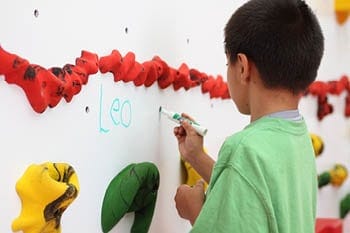
Letter recognition, climbing, and drawing are integrated in this cross-curricular activity.
Materials Needed
- Adaptive Wall
- Letter Magnets
- Dry-Erase Markers
Prior to Activity
Place letter magnets, high and low, across the climbing wall.
Activity
Give each climber a dry-erase marker. Have children climb to a letter and write a word or draw a picture of something that begins with that letter.
Inclusive Variations
Cognitive: This activity can be altered to accommodate children who are just beginning to learn their letters. Have the children explore the letters on the wall at their own pace. When they reach a letter, have them say what letter it is. Increase the challenge to include tasks such as “What comes before/after” or “Say a word that starts with that letter.”
Communication: Have children climb to a letter and verbally state that letter, or say a word that begins with that letter. Teachers and therapists can modify this further to include only the letters with which the child has difficulty. Or have a teacher, therapist, or classmate call out a letter. The climbers must then climb to that letter.
Physical: For children who use mobility devices, place the magnets at a height they can comfortably reach. This actively includes them in a physical and cognitive activity.
Sensory: Use magnetic letters that are braille-embossed, have a raised surface, or provide various textures. When a child who has a vision disability touches the letter, have him/her feel it and verbally state the letter. Non-climbers can give directions to help the climber locate handholds and the letters.
Skills/Benefits for Children with Special Needs
- Articulation
- Letter recognition and identification
- Memory and recall
- Association
- Receptive language
- Auditory processing
- Braille recognition
More Special Needs Ideas & Inspiration
If you’re looking for more great ways to get students with special needs engaged and having fun at school, be sure to stop by the Special Needs category page to find our latest blogs. Also, take a moment to browse the online Special Needs store, where you’ll find hundreds of quality products and solutions for learners of any age.
[…] best aspects of rock climbing is that almost all kids can do it. It can be helpful for kids with different disabilities, including physical, sensory, and […]