
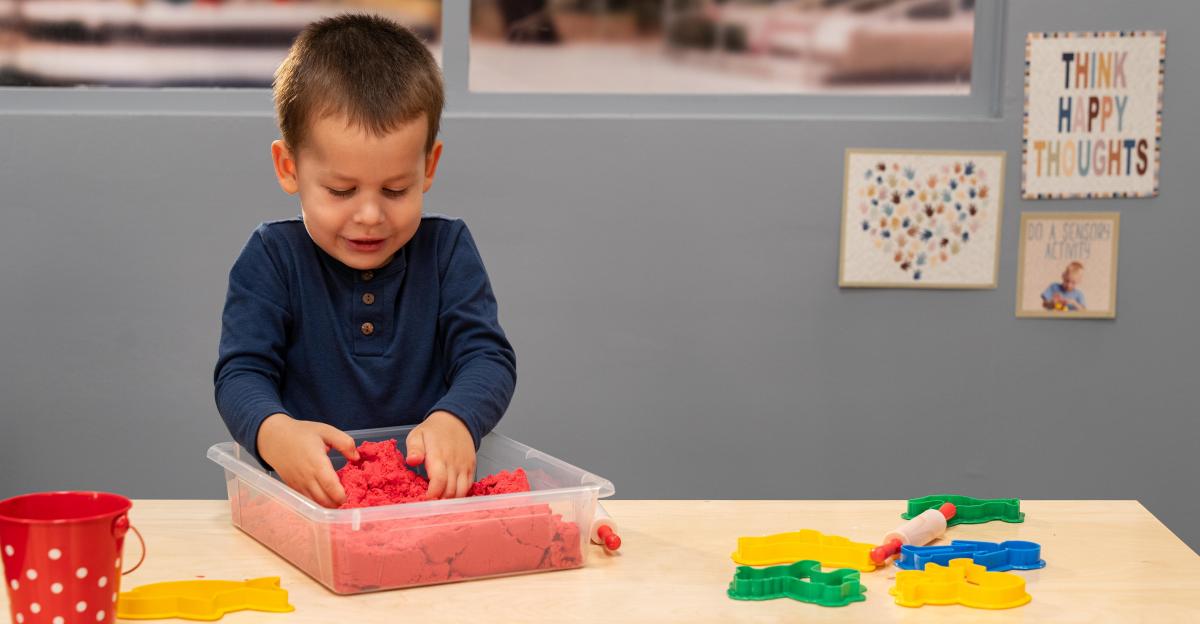
Early childhood education has always reflected a strong understanding of how young children learn best. Long before learning sciences and neuroscience offered detailed frameworks, early childhood educators built environments around play, exploration, relationships, and hands-on discovery. Those foundational principles remain unchanged, even as schools continue to refine how they are expressed through classroom design and learning environments.
What has evolved is a shift in the learner profile itself. Today’s incoming PreK-second graders are entering school having been exposed to significant amounts of technology, media, and digital stimulation. At the same time, educators are navigating increased classroom needs related to self-regulation, executive functioning, social and emotional development, and sustained attention.
Classroom environments are increasingly recognized as part of the instructional ecosystem alongside curriculum, teaching practices, and relationships. When designed intentionally, learning spaces can support engagement, help children navigate transitions, encourage independence, and create conditions where learning feels natural and accessible. Rather than viewing the classroom simply as a place for academics, educators are using space as a tool to support emotional regulation, encourage purposeful movement, and help children engage and focus during learning. This perspective builds on long-standing early childhood practice while incorporating new research and design approaches that help strengthen what is already working well in classrooms.
Designing for Today’s Early Learners
Early childhood classrooms are dynamic spaces where movement, conversation, and hands-on exploration happen continuously. As schools refine early learning environments, many are focusing on how physical design can better support attention, participation, and smooth transitions across a full school day. Along with adjusting instructional approaches, there is an emphasis on shaping the learning environments that help children fully engage in the learning experiences all around them.
Calming Visuals
Early learning environments are naturally filled with visual stimulation: student artwork, hands-on materials, classroom décor, and learning posters and charts that reflect the richness of classroom activity. In many schools, the focus has shifted toward organizing these visual elements more intentionally, so they support learning rather than compete for attention.
Research in classroom design demonstrates that highly dense, visually cluttered environments can significantly increase cognitive load and off-task behavior for young children. To prevent sensory overload, modern design is moving away from the overstimulating decor and bright primary colors that traditionally dominated these spaces. Instead, the emphasis is on establishing neutral backdrops and a natural palette as the foundation, knowing color will inherently be added by children, their belongings, learning materials, etc.
Rotating displays tied to purposeful use of visual supports, and an emphasis on posting children’s work, help create an environment that is not so overstimulating. These adjustments make classrooms less overwhelming so children can more easily navigate through their daily routine.
Acoustic Management
Listening plays a central role in early childhood learning. Throughout the day, children are constantly processing spoken language, engaging in peer interactions, and responding to teacher guidance. The acoustic quality of a classroom can significantly influence how easily those interactions occur.
Research in educational acoustics indicates that excessive background noise and reverberation can severely interfere with speech clarity. Because young learners are still actively developing neurological auditory pathways, they require a much higher signal-to-noise ratio than adults to accurately distinguish speech sounds. When acoustic thresholds exceed recommended standards, it directly impacts comprehension, language acquisition, and emotional regulation.
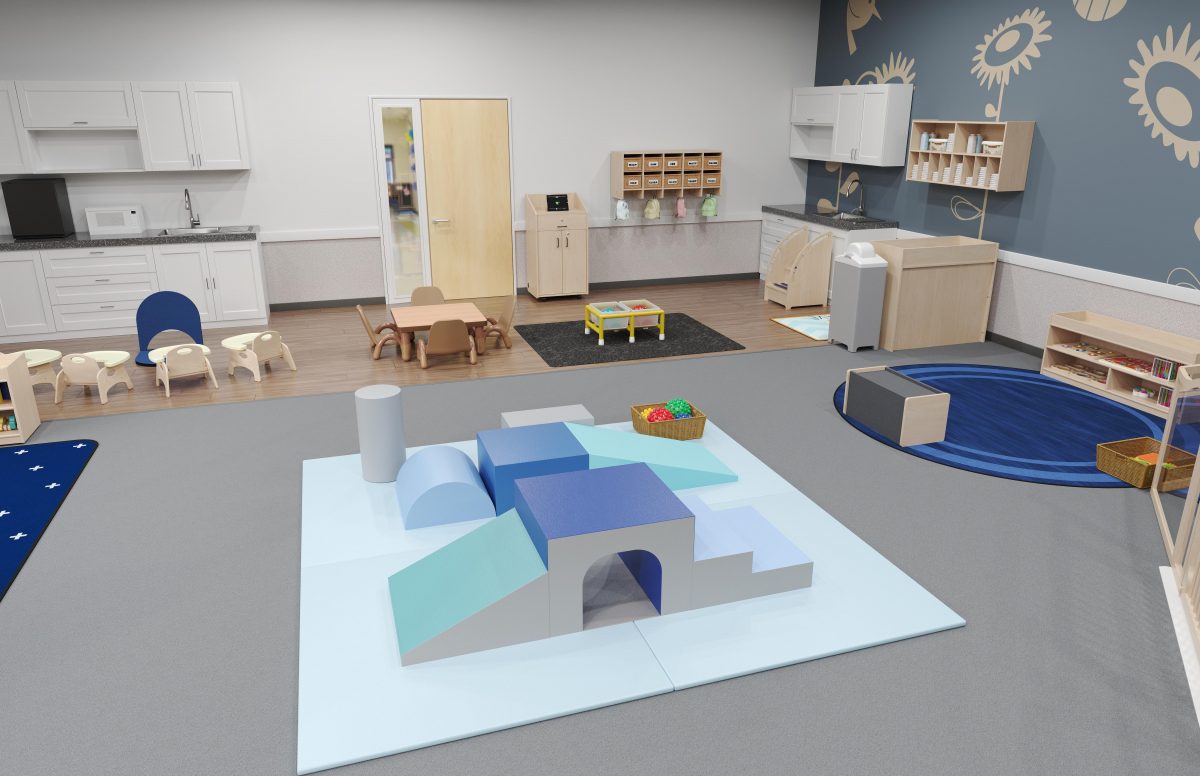
To support clearer communication, many early learning environments incorporate sound-absorbing materials and thoughtful spatial design. Area rugs, acoustic wall panels, sound-absorbing dividers, and strategically placed shelving help reduce noise reflection while maintaining clear traffic patterns. Equally important is the way classrooms are organized, with quieter zones for reading or small-group instruction positioned away from more active learning centers. The result offers clarity and spaces where conversation, instruction, and collaboration can be heard and understood with greater ease.
Zoned Lighting
Lighting is another important factor in how children experience and engage with their environment. Many schools are moving away from harsh, uniform fluorescent overhead lighting toward layered, adjustable lighting options such as dimmers, natural light integration, and soft lamps that can be modulated based on the activity or the current energy level of the room.
Data from environmental design studies have consistently associated ample natural daylighting with improved student well-being, increased comfort, and accelerated academic progress over the school year. Flexible artificial lighting allows educators to adapt the atmosphere of the room based on activity. Brighter settings can support collaborative exploration and active play, while softer lighting can help create a calmer environment for reading, transitions, or rest time.
When lighting is considered as part of the overall learning environment, classrooms gain the ability to shift tone and energy in ways that support the natural rhythm of early childhood education.
Regulation-Centered Design
Early childhood is a critical period for developing self-regulation, emotional awareness, and social understanding. These skills emerge gradually through relationships, repetition, and supported practice. Within this developmental process, the classroom environment must actively co-regulate, helping children manage big emotions and transitions to reduce behavioral friction across the school day.
The goal is not to replace educator instruction or guidance, but to leverage physical space to complement educator-led strategies, ensuring children feel secure, supported, and able to re-engage when ready.
Safe Spaces and Self-Regulation Areas
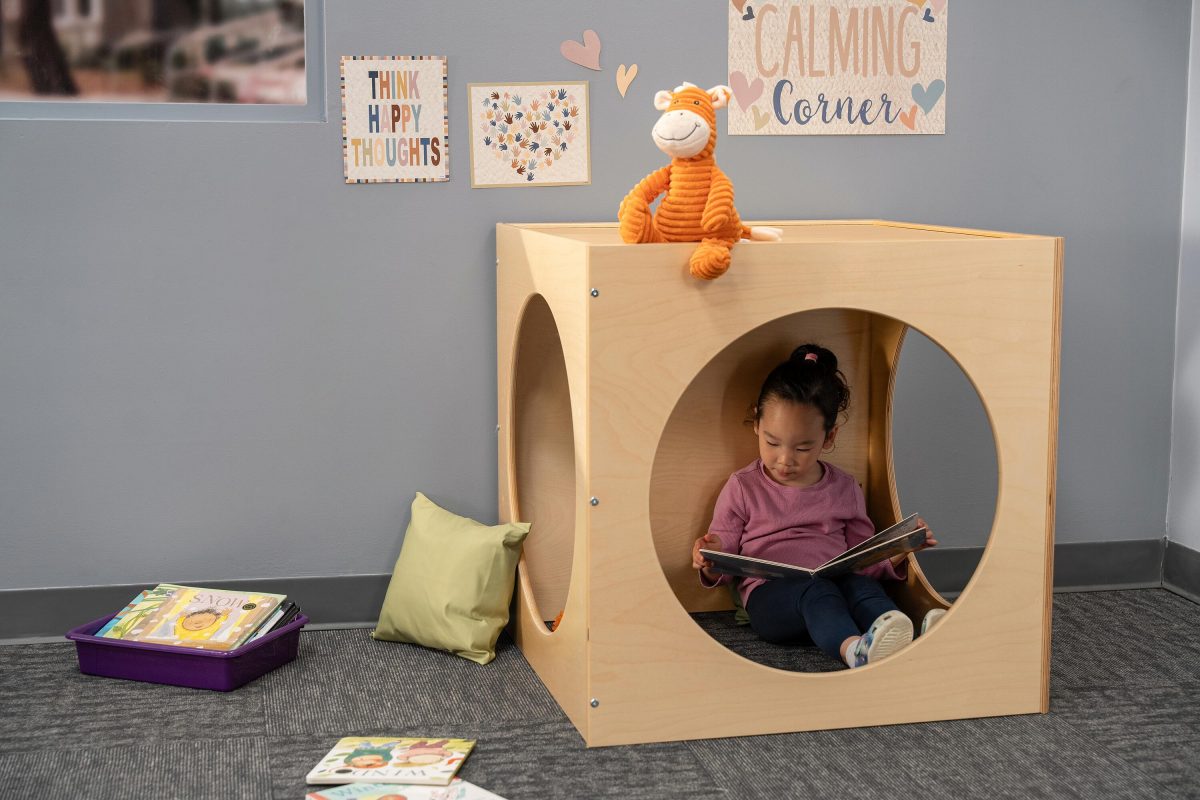
Many early learning classrooms now include designated, comfortable calming spaces such as cozy corners or quiet reading nooks that are integrated into the classroom rather than set apart from it. These areas are designed to be accessible to all children and used as part of normal classroom routines, allowing a dysregulated student to step away, reset, and self-regulate without feeling isolated from the peer group.
Furnishings such as soft seating, cushions, books, and sensory tools help create environments where children can take a brief pause, regulate their emotions, and return to group activities when ready. Visual supports, such as emotion charts or cues for calming strategies, can also help children identify how they are feeling and choose appropriate ways to self-regulate. When thoughtfully integrated, these spaces reinforce the message that emotional regulation is a skill that develops over time and is supported through both relationships and environment.
Sensory Input Related to Movement, Balance, and Body Awareness
Movement is a natural and essential part of early childhood learning. Children build understanding through physical interaction with their environment: carrying, building, sorting, climbing, and exploring. Neurological research highlights that physical movement stimulates the vestibular and proprioceptive systems, increasing blood flow to the brain and directly enhancing focus and cognitive processing.
A comprehensive scoping review published in the European Journal of Special Needs Education confirms the structural power of these choices. The study demonstrated that while traditional, overly static layouts exacerbate learning barriers and auditory/visual distractions, specific environmental interventions (such as introducing fine motor activities and sitting on active therapy/balance surfaces) directly assist task attention, writing, and mathematics performance, particularly for neurodivergent learners.
Many classrooms now incorporate subtle movement opportunities directly into learning spaces via flexible seating options and movement-friendly furnishings. Balance stools, wobble cushions, sensory floor tiles, and standing-height tables provide children with appropriate ways to meet their natural need for movement while staying fully engaged in instruction.
In addition, classroom layouts that support clear movement pathways and accessible materials encourage independence and active participation. When children can access and return materials themselves, easily move between centers, and engage physically with learning tasks, they build both motor skills and self-regulation capacities simultaneously.
The Convergence of Play and Academics
Play remains one of the most effective ways young children develop foundational academic and social skills. Across early childhood settings, there is continued emphasis on learning environments that integrate guided play and free play with intentional instructional design.
Hands-On Learning Environments
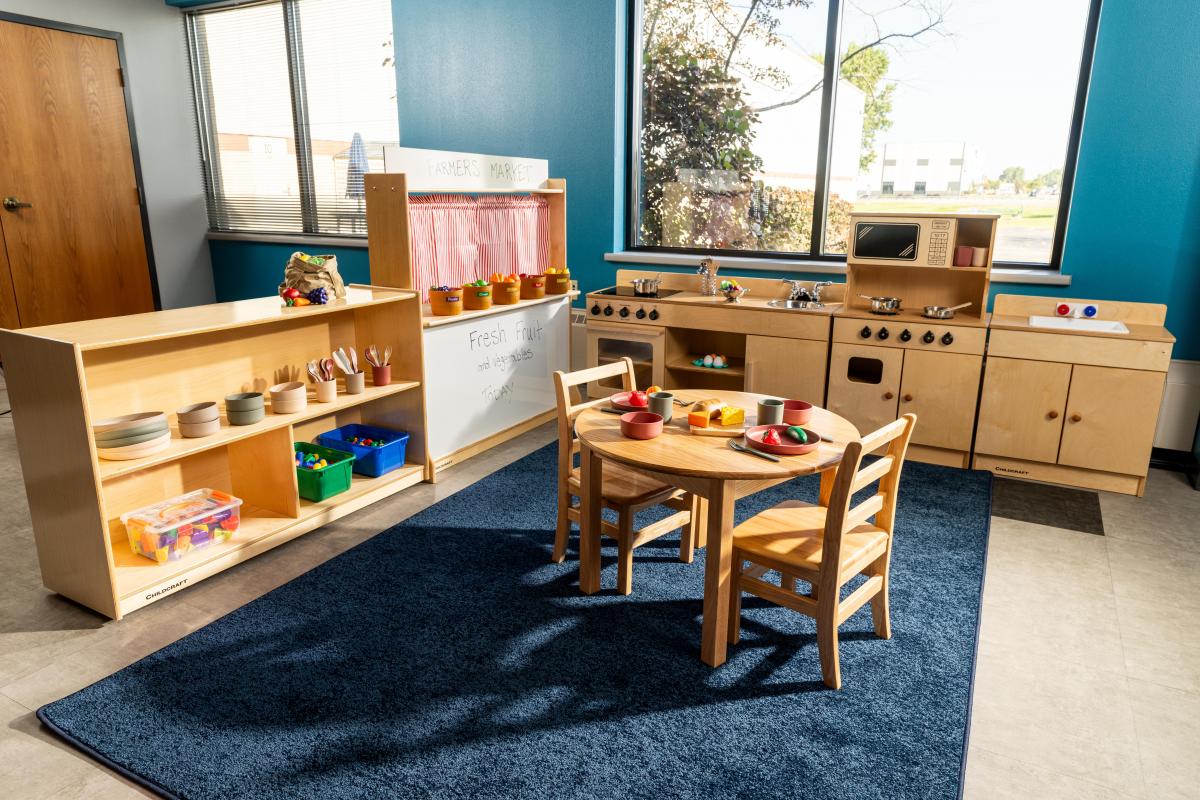
Hands-on materials are central to early learning classrooms, providing children with opportunities to explore concepts through direct experience. Blocks, manipulatives, puzzles, puppets, art materials, and other sensory tools all support different dimensions of development and replace static worksheets with dynamic learning.
Through block play, children engage with spatial reasoning, early math concepts, and problem-solving. Dramatic play environments support language development, narrative thinking, and social negotiation. Manipulatives reinforce counting, sorting, and patterning skills in ways that are concrete and meaningful. Data from the Harvard Center on the Developing Child emphasizes that play-based, hands-on environments yield significantly higher executive functioning scores and stronger long-term academic retention than traditional instructional methods.
Multi-Purpose Learning Centers
Most early learning classrooms are designed around learning centers or interest areas that support multiple types of learning throughout the day and are planned based on instructional goals and student interests.
The dramatic play center, for example, may provide a venue for one child to engage in storytelling, vocabulary development, or emergent writing, while another child practices social problem-solving or emotional regulation. The block area can foster counting, patterning skills, and fine motor development, shifting seamlessly between independent exploration and collaborative endeavors depending on how children choose to engage with classmates and learning materials.
With purposeful planning of the classroom arrangement, appropriate furniture, and available materials, children can engage in an endless array of cognitive, physical, social, and emotional development activities.
Taking Learning Outdoors and Bringing the Outdoors In
Outdoor learning is increasingly viewed as an essential extension of the early childhood classroom rather than something that only takes place during recess breaks. And at the same time, natural materials are being incorporated into indoor environments to create stronger continuity between indoor and outdoor experiences.
Seamless Indoor-Outdoor Flow
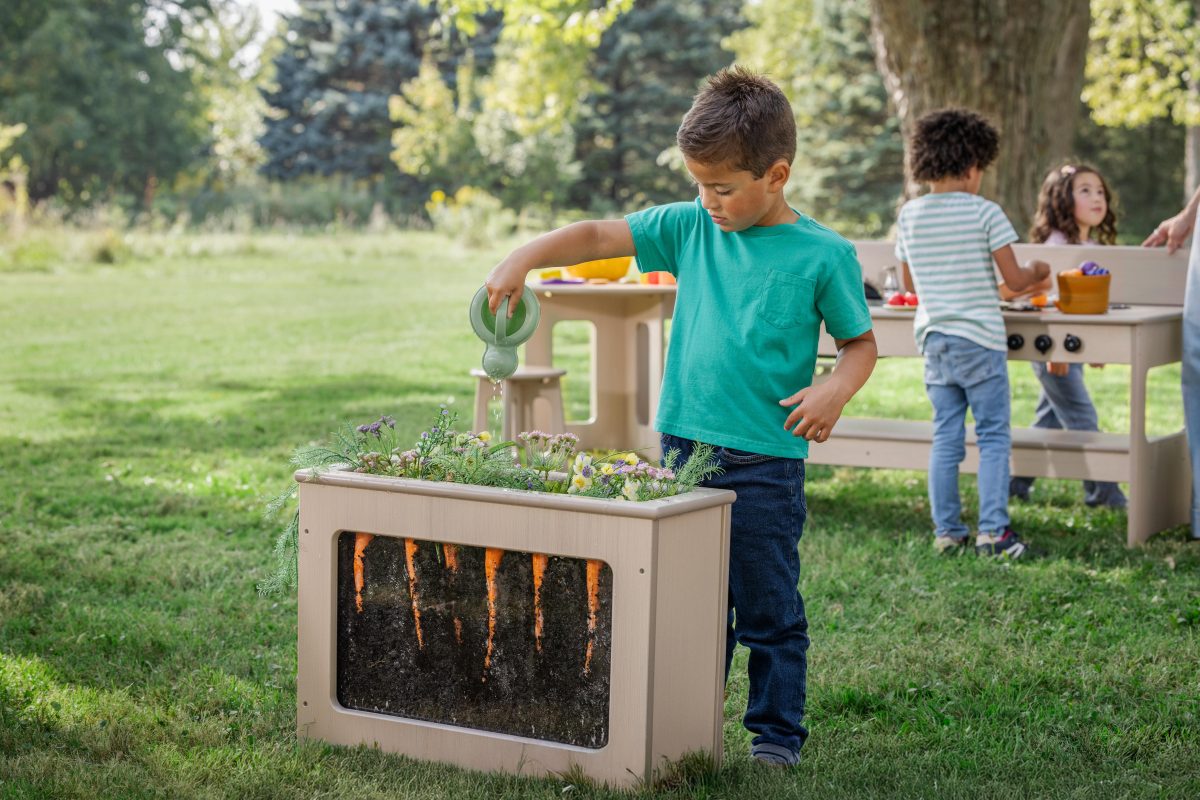
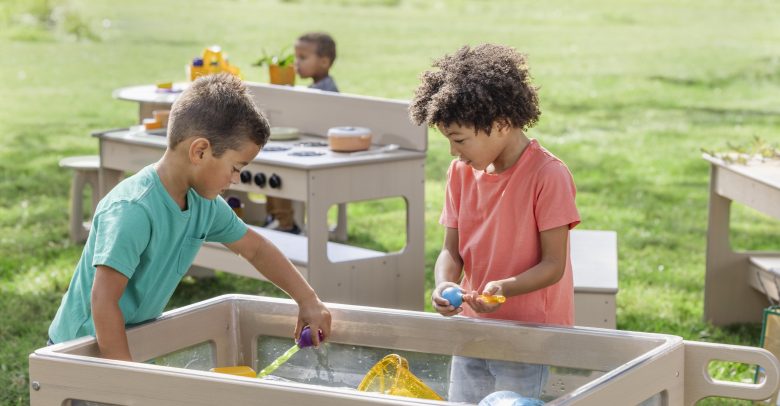
Outdoor learning environments are being designed with many of the same principles as indoor classrooms. Sand and water tables, mud kitchens, outdoor tables, benches, and stools allow children to engage in familiar learning experiences in natural settings, effectively moving indoor learning centers outside.
These environments support exploration, collaboration, and physical development while also creating opportunities for scientific inquiry, early math exploration, and language development. Outdoor spaces often expand the possibilities for imaginative play and group problem-solving, offering children a different but complementary context for learning. When indoor and outdoor environments are intentionally aligned, children experience smoother transitions and more consistent engagement across settings.
Natural Materials and Textures
Inside the classroom, natural elements such as wood, stone, living plants, water, and textured sensory materials are increasingly being incorporated into learning centers and furnishings to encourage tactile exploration and scientific inquiry.
These materials support hands-on exploration while also encouraging observation and curiosity about the natural world. They can be used across subject areas—from investigating and describing characteristics of organisms in science to classifying and measuring in math. In addition to their instructional value, natural elements often contribute to a calmer, more grounded classroom atmosphere that supports sustained attention and engagement.
The Durability Imperative
Early childhood environments experience constant, heavy use throughout the school day. While modern school budgets demand maximum longevity, early childhood spaces endure immense wear and tear, making durability and adaptability essential considerations in classroom design. Schools are increasingly balancing instructional goals with long-term facility planning, seeking solutions that support active learning while maintaining safety, comfort, and structural integrity.
High-Quality, Durable, Safe Furniture
Early childhood furniture must withstand the daily use of active young children who are often rough on their surroundings. As a result, schools are prioritizing materials and furnishings designed for frequent use, easy cleaning, and long-term durability. Rounded edges, stable construction, and developmentally appropriate sizing support safety and independence, while durable finishes help maintain appearance and function over time despite heavy daily use.
Multi-Generational Material Integrity
Beyond immediate durability, schools must consider how classroom investments perform over time. To ensure pieces do not break down aesthetically or structurally over many years, procurement standards are prioritizing non-porous, easy-to-clean, and impact-resistant surfaces that can withstand rigorous, commercial-grade cleaning protocols.
Future-Proofing with a Trusted Partner
As schools continue investing in early childhood education, there is a growing emphasis on creating environments that are durable, sensitive to children’s needs, and aligned with how young children learn and develop.
This work requires thoughtful alignment between educational practice, design expertise, and long-term planning. Navigating this changing landscape successfully often depends on partners who understand both the fundamentals of early learning and the evolving realities of today’s classrooms.
Organizations like School Specialty bring deep expertise in supporting early learning environments, helping schools translate research-informed principles into practical design solutions. By providing furnishings, learning materials, and design approaches that align with developmentally appropriate practice, they help schools create cohesive learning environments that balance modern operational demands while supporting students and educators alike.
Ultimately, the most effective early childhood spaces are those that remain grounded in a simple and enduring principle: When environments are designed with care, intention, and strong data-backed choices, they help children engage more fully in learning and allow educators to do what they do best—guide young learners as they explore, grow, and make sense of the world around them.
Ready to start designing an Early Childhood space and need some assistance? School Specialty’s Projects By Design® offers help from collaborative no-cost design through installation and beyond.
Leave a Reply