
When your classroom budget is tight, every bottle of paint matters. Taking a few simple steps to care for your acrylic and tempera paints can help them stay fresh and usable for as long as possible.
Proper paint storage can also help prevent waste. You can avoid problems such as dried-out paint, changes in consistency, and contamination by following a few basic guidelines.
Whether you are stocking your art room, preparing for a new school year, or simply trying to make your current supplies last, these paint care tips can help you get the most from every bottle you purchase.
Acrylic and Tempera Paint Care Tips
1. Store Paint in a Cool, Dry Place
Where you store your paint can have a big effect on its quality.
Keep acrylic and tempera paint in a cool, dry place away from extreme temperatures. Freezing temperatures and temperatures above 120 degrees Fahrenheit can cause changes to the paint that may make it difficult or impossible to use.
Extreme temperatures can cause pigments to settle and can change the paint’s viscosity, or thickness. Once the consistency of the paint changes, it may no longer work the way it should.
Avoid storing paint in places that can become extremely hot or cold, such as unheated garages, sheds or vehicles. A classroom supply cabinet or other indoor storage area is usually a better choice.

2. Pay Attention to the Paint’s Shelf Life
Paint does not last forever, even when it is stored properly.
Opened paint containers should be used within six months. Unopened paint containers can generally be stored for up to two years.
If you open a container near the end of its two-year shelf life, plan to use the paint as soon as possible. Check the paint before using it. If the consistency, color, or smell seems unusual, it may be time to replace it.
One easy way to keep track of your supplies is to use older paint before opening newer containers. When purchasing paint, place newer bottles toward the back of your storage area and move older bottles to the front.
This simple first-in, first-out system can help prevent paint from sitting unused until it reaches the end of its shelf life.
3. Prevent Cross-Contamination
One of the easiest ways to protect your paint supply is to prevent contamination.
When students dip dirty brushes or other applicators directly into a paint container, they can introduce water, dirt, paper fibers, or other colors into the paint. Returning leftover paint to the original container can also introduce contaminants.
Over time, this can cause the paint to degrade or spoil. The good news is that preventing contamination is fairly simple.
Pour Paint Into Smaller Containers
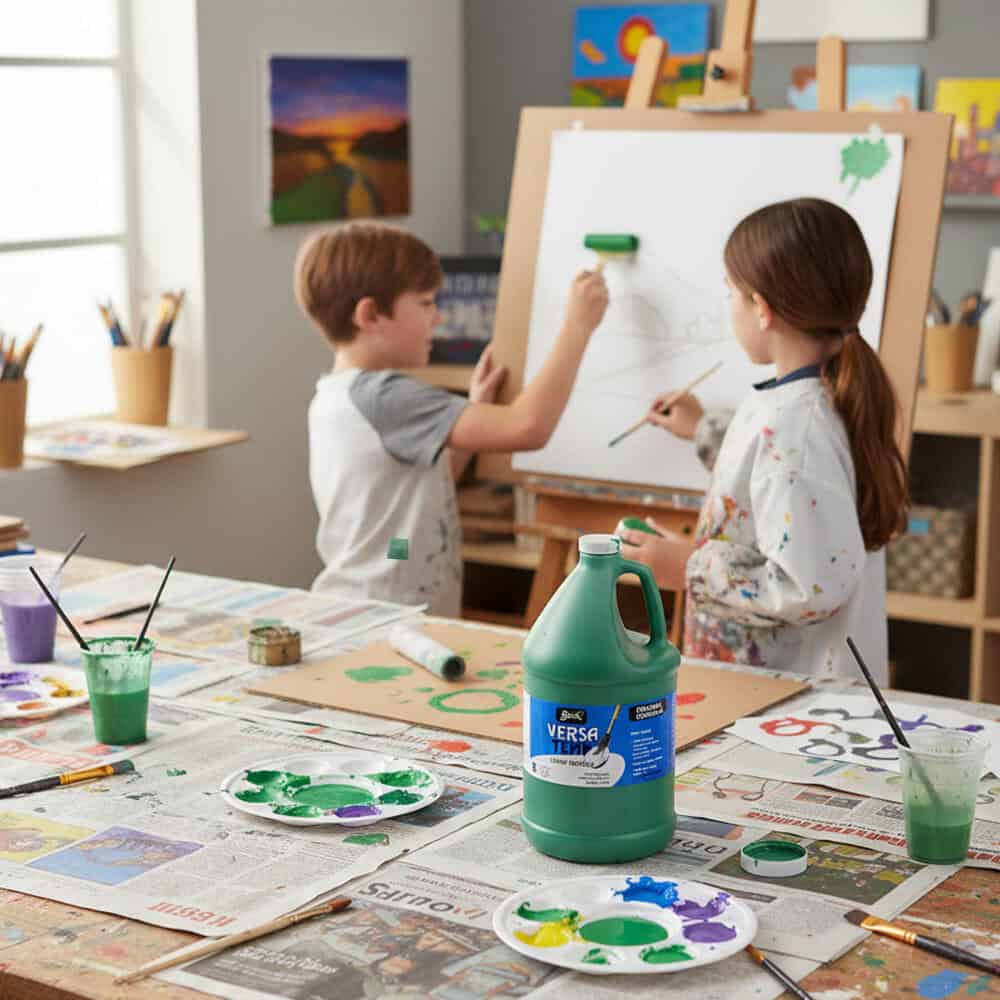
Instead of having students work directly from a large bottle or container, pour the amount of paint they need into smaller, resealable containers.
For example, you can use individual paint cups. For classrooms where spills are a concern, no-spill paint cups can be another useful option.
Only pour out the amount of paint you expect students to use. If the paint in the smaller container becomes contaminated, you will only need to discard that smaller amount rather than the entire bottle.
Be sure students use fresh water to clean brushes while working with paint in the smaller containers. Dirty rinse water can introduce unwanted materials into the paint.
Never Pour Used Paint Back Into the Original Container
It may be tempting to pour leftover paint back into the bottle to avoid waste, but this can contaminate the rest of the paint.
Instead, discard leftover paint according to your school’s disposal guidelines. It is better to lose a small amount of leftover paint than to risk contaminating an entire container.
Do Not Dilute Paint in the Original Container
If you need to thin paint, never add water directly to the original container.
Adding water can change the consistency of the entire container and may shorten its useful life. Instead, put the amount of paint you need into a smaller container and adjust it there.
Keep Brushes Out of the Original Container
Avoid dipping brushes, sponges, or other applicators directly into the original paint container.
This is especially important when multiple students are using the same paint. Brushes can carry dirt, water, and other paint colors back into the container.
Using smaller paint cups helps keep your main supply clean and makes it easier for students to share materials.

4. Close Paint Containers Tightly
After every use, make sure the cap or lid is closed tightly.
A loose lid can allow air to enter the container, which can cause paint to dry out or change consistency. Before putting paint away, check the container and lid to make sure they are clean and that the lid is securely closed.
If the container has a seal under the lid or cap, permanently remove and dispose of it after opening the container. Do not leave pieces of the seal in place where they could interfere with the lid closing properly.
Taking a few extra seconds to close each container correctly can help protect the paint between uses.
Make the Most of Your Classroom Paint
Good paint care does not have to be complicated. A few simple habits can help protect your classroom supply and reduce unnecessary waste.
Remember these four basic rules:
- Store paint properly. Keep it in a cool, dry indoor location and protect it from extreme temperatures.
- Use older paint first. Opened paint should be used within six months, while unopened paint can generally be stored for up to two years.
- Prevent contamination. Pour paint into smaller containers and keep brushes and other applicators out of the original container.
- Close containers tightly. Make sure caps and lids are secure after every use.
With proper storage and careful handling, you can help keep your paint in good condition and stretch your classroom art budget.



Leave a Reply