
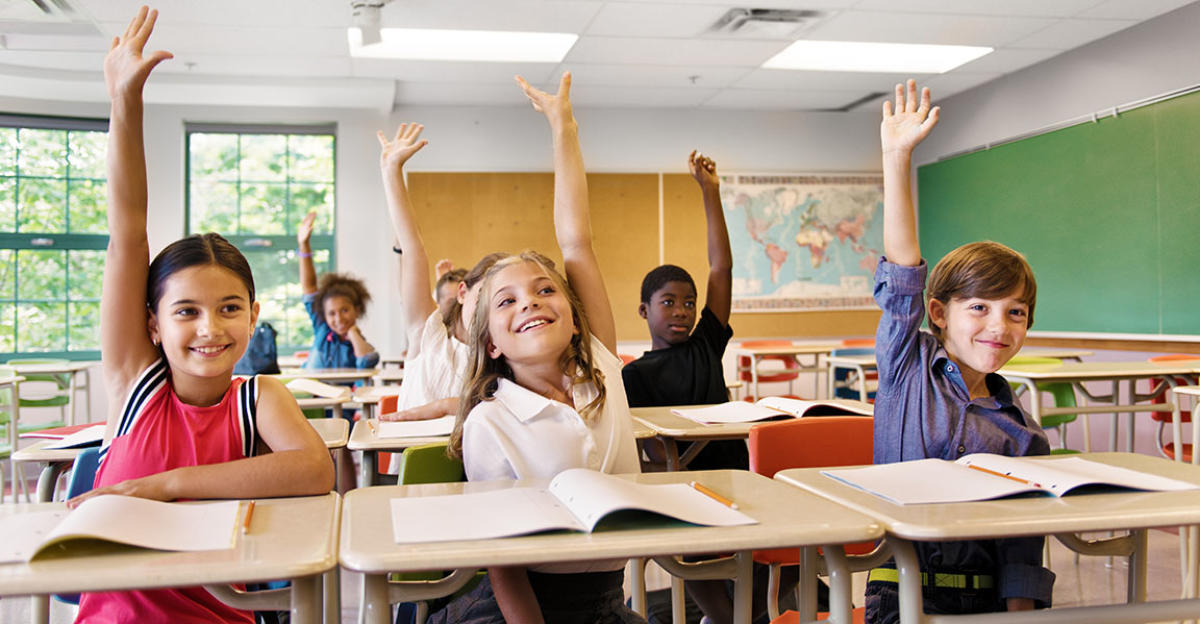
Students feel comfortable, confident, and successful when they know what is expected of them and can meet those expectations. These expectations, combined with classroom routines, procedures, and organization, create a positive classroom learning environment that increases students’ ability to learn and succeed.
Table of Contents
- Tips to Generate Positive Student Behavior and Outcomes
- 1. Positive and welcoming atmosphere that is clean and minimalist
- 2. Establish clear routines and procedures
- 3. Consistent student expectations that meet the needs of all students
- 4. Organization is key—everything has a place, and everything in its place!
- 5. Plan the routines and procedures for celebrating students
- 6. Quiet, private, and calm areas for personal time and reflection
In recent years, many schools and teachers have witnessed an increase in social and emotional needs and challenging student behaviors. Individually, these concerns can pose problems for students as they develop their interpersonal and intrapersonal skills, while holistically, classroom concerns can disrupt learning.
To mitigate these concerns, classrooms, schools, and districts have created plans for social and emotional learning, positive student behavior, and classroom and school-wide expectations, routines, and procedures. Collectively, these essential elements establish the strong foundation needed to create a positive learning environment that is welcoming for all students and safe for learning and discovery.
Tips to Generate Positive Student Behavior and Outcomes
As a former school administrator, little concerned me more than a teacher getting frustrated with a student’s behavior when the classroom structure lacked the basic routines, procedures, and expectations needed to create a positive classroom environment. Students cannot succeed in their behavior or academic learning without an environment intentionally designed for this purpose. This is most certainly step one, the foundation for a successful and positive school year for both the students and the teacher.
So, how do teachers create a positive classroom learning environment that is structured, organized, consistent, inviting, and engaging? Well, it is much easier than it sounds and hinges on creating an environment before students arrive in the classroom on the first day of school. Of course, these ideas can be implemented at any time throughout the school year, but starting on the right track is always best!
Here are six key components for creating a classroom environment that leads to positive student behavior and outcomes.
1. Positive and welcoming atmosphere that is clean and minimalist
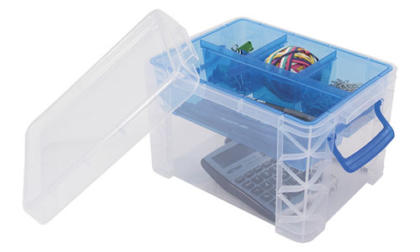
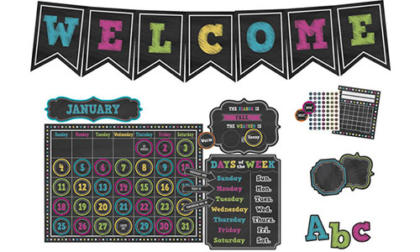
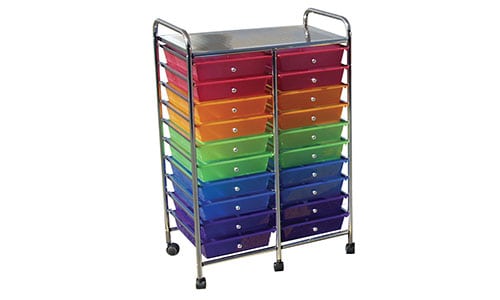
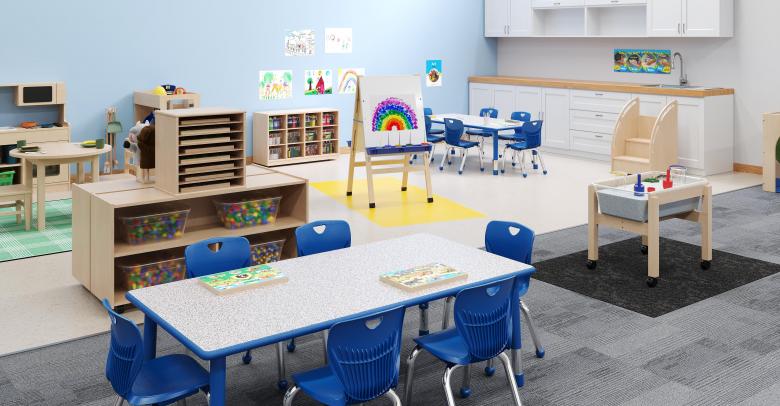
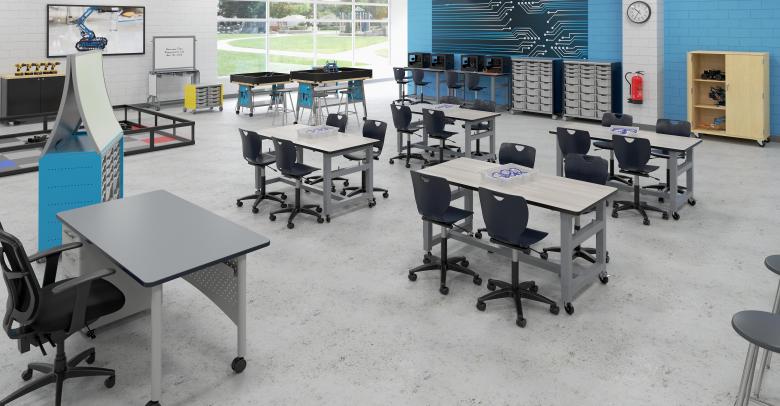
Classrooms that foster a positive, professional environment inspire community and learning. Classroom storage and organization are key to creating a student-centered and engaging professional environment.
Clutter and chaos are visually distracting and overly stimulating for students. Prevent this by organizing piles of papers and folders with items such as desktop trays and sorters. Classroom decorations and aesthetics also play a role in accomplishing this objective. We want students to feel comfortable, safe, and inspired by their learning environment.
2. Establish clear routines and procedures
Teachers need a plan for how everything in their classroom will happen. This is done by establishing clear routines and procedures.
Teachers must think through, plan, and then teach these routines and procedures effectively. Students should know where things are located and how to use these tools to create flow, consistency, and success throughout the school day.

3. Consistent student expectations that meet the needs of all students
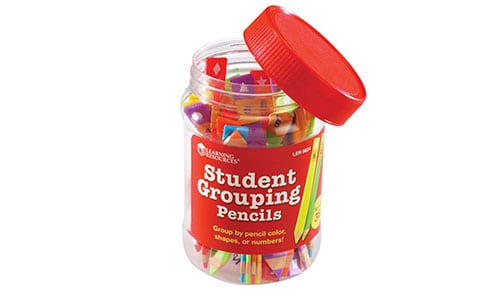
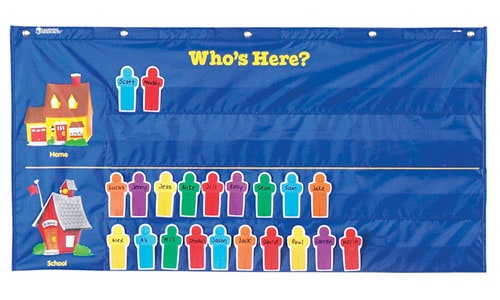
How can students successfully meet expectations if they don’t even know what is expected of them in the first place, or if those expectations keep changing? By nature, ALL students crave positive attention. Consistency and structure are comforting to students and help meet expectations and earn positive praise.
Additionally, while some expectations pertain to the class, teachers must also plan for and meet the needs of individual students who sometimes need even more specific expectations or expectations presented differently. Individualizing to meet students’ needs is another component of creating expectations that lead to success for all students.
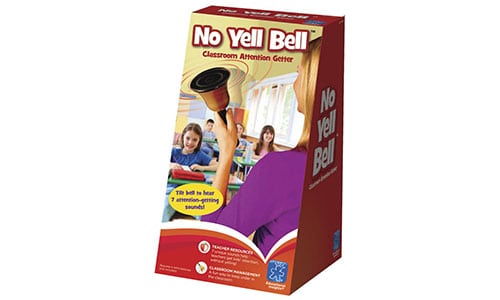
4. Organization is key—everything has a place, and everything in its place!
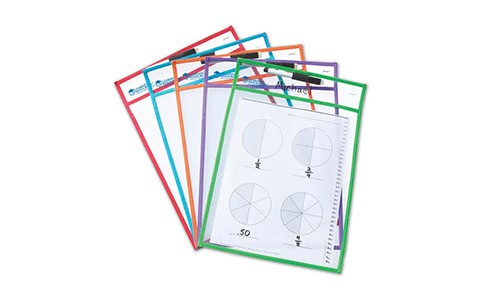
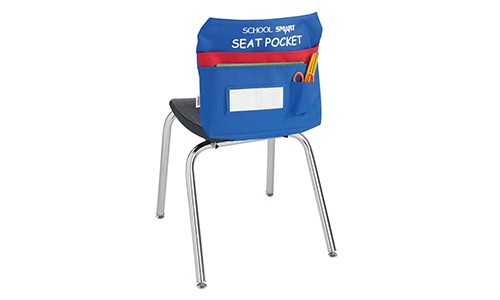
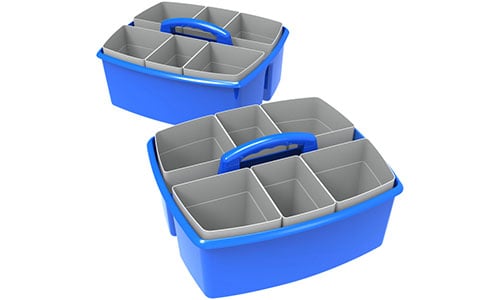
Ensuring that all student and teacher materials are organized and structured fosters independence and confidence in a student-centered, guided environment.
Additionally, collaborative tools and spaces are created through this organizational process, which allows students to practice and learn social and communication skills. For this to be successful, students need to know where items are located and how to utilize and easily access these tools and resources.
5. Plan the routines and procedures for celebrating students
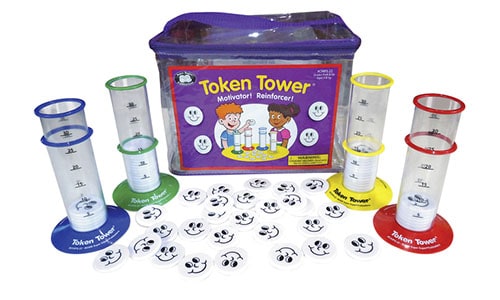
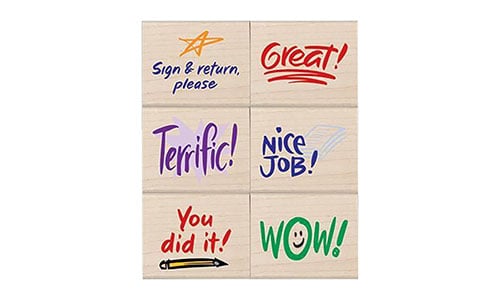
You can never celebrate student successes too much. Positive encouragement and recognition are by far the most motivating form of behavior reinforcement. Through clear and consistent expectations, recognition of achievement, be it through awards and incentives or other established procedures, empowers students, reinforces desired outcomes, and builds confident and happy students.
Celebrating students with tangible items, words of affirmation, time and attention, or some other form of enforcement creates happy hearts and engaged minds. This type of character education is a huge byproduct of everyday learning and an important part of any classroom.


6. Quiet, private, and calm areas for personal time and reflection
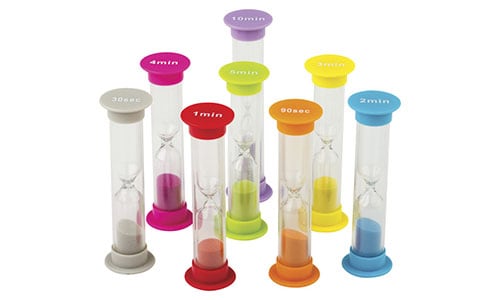
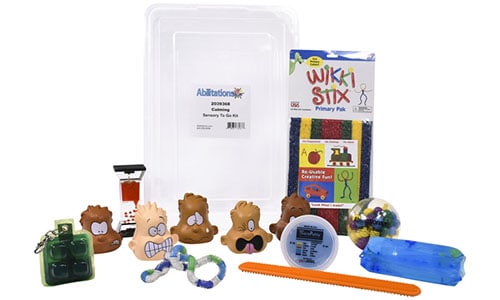
Sensory spaces, such as a calming corner or other multi-sensory environment, provide students a safe and secure place to regulate their emotions and bodies. When organizing a classroom, teachers need to create these areas, plan how the space will be used, including all components within each area, and then teach students the purpose and how to use everything effectively.
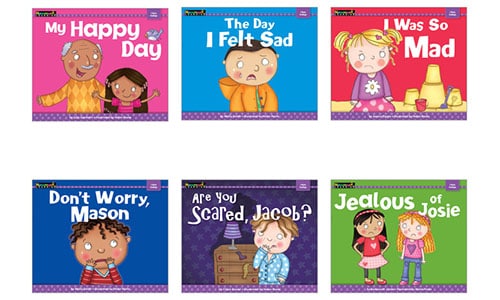
There are many fun ideas and product options available, including self-regulation strategies, soft seating, timers, fidgets, books, and more!

Teachers with quality routines, clear procedures, and consistent expectations will see positive outcomes in their overall classroom environment and student behavior.
Planning should include determining which routines, procedures, and expectations will be put in place, creating the necessary materials, organizing them in the classroom, and then effectively teaching students why and how everything functions successfully. This process results in improvements in student behaviors, increases in student achievement, and overall student happiness within a safe, collaborative, and positive classroom learning environment.

Laura Nicole Hill
Nicole has served within the field of education for 16 years as a classroom teacher, specialist, assistant principal, and principal. She is certified as an educator in the areas of EC-12 Principal, EC-8 Generalist, 8-12 English Language Arts, Reading, and Social Studies, EC-12 Special Education, EC-12 Gifted and Talented, and EC-12 English as a Second Language. Her school experience varies and includes work with students in prekindergarten through 12th grade, both in Texas and Europe, and within communities that were uniquely diverse in terms of their demographics, size, and campus needs. While serving in these roles, she developed expertise in the areas of curriculum and instruction, professional development, and leadership. As the Instructional Solutions Subject Matter Expert for School Specialty, she provides expertise in the areas of Literacy and Math, as well as other content areas and classroom resources.
Read more by Laura Nicole Hill–>

Thank you for sharing these insightful tips! Fostering a positive classroom environment is so crucial for effective learning. I especially loved the idea of incorporating student feedback into classroom activities—it’s a great way to make everyone feel valued and engaged. Looking forward to trying some of these strategies in my own classroom!
The six tips for creating a positive classroom learning environment offer practical ideas for encouraging engagement, collaboration, comfort, and a better learning experience.