
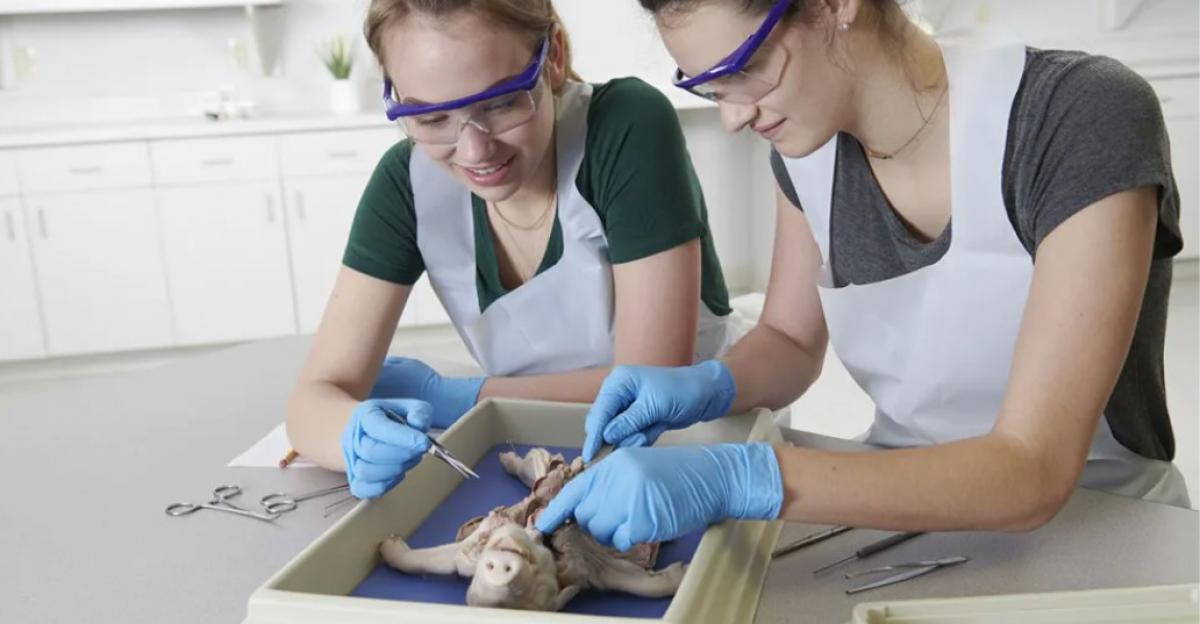
Hands-on dissection gives students a meaningful way to explore anatomy and physiology while connecting classroom science to real-world careers in forensic science. By examining internal structures, documenting observations, and solving practical problems, students can build precision, critical-thinking, communication, collaboration, and fine motor skills that apply to fields such as forensic pathology, anthropology, toxicology, crime scene investigation, and DNA analysis. These experiences can make science more engaging while helping students discover the growing range of forensic science career pathways available to them.
Table of contents
While there’s plenty to learn from listening to lectures or examining images in textbooks, dissection allows students to take a hands-on approach to learning and change how they think about science.
When dissecting, students can see, touch, and explore the inner systems of animals to better understand anatomical and physiological structures and functions, including how the human body works. They will see for themselves how the internal structures of certain small animals can be likened to those of the human body.
In addition to providing students with valuable hands-on learning experiences, you can tie lessons to the real world by connecting dissection to a wide range of forensic science careers. Keep reading to learn how.
Connect growing careers in forensic science to dissection.
Some students in your class may already have an interest in forensic science because of the popularity of true crime shows on Investigation Discovery and scripted crime shows like the CSI: Crime Scene Investigation franchise. Other students may not be interested right away, but may become interested during dissection lessons. You never know what might spark their interest.
And now is a great time for them to explore careers in forensic science. The U.S. Bureau of Labor Statistics shows that by 2030, careers in forensic science are projected to grow 16 percent.
For interested students, there are many career options for them to choose from. Take the time before they start dissecting to talk about the wide range of careers in forensic science, including the following:
- Forensic scientist
- Forensic technician
- Crime scene investigator
- Forensic investigator
- Forensic medical examiner
- Forensic entomologist
- Forensic toxicologist
- Computer forensics examiner
- Criminalist
- DNA analyst
While dissection alone won’t teach students all the skills they need for these forensic science careers, it can get them thinking about their futures and seriously considering what they want to do.
Dissecting will also assist in developing cross-curricular skills needed for careers across a variety of fields. They will learn to be precise and accurate while building critical thinking, problem-solving, collaboration, and communication skills. They will communicate and document observations, use mathematical equations and applied sciences, and use technology for additional research. The use of dissection tools can also help develop fine motor skills.
Connect dissection lessons to real-world problems.
Dissection isn’t easy for everyone. But imagine if you give students motivation to look past what’s in front of them to focus on finding evidence to identify remains or to solve a murder. When you combine dissection with hands-on activities, you can motivate your students to view dissection in whole new ways.
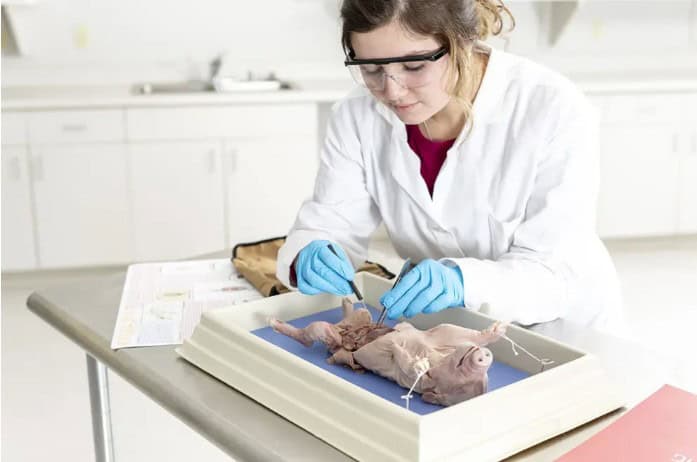
By providing students with more purpose when dissecting, the more engaged they will be. Instead of just dissecting to better understand anatomy and physiology, you can have students dissect fetal pigs to make connections to forensic science careers.
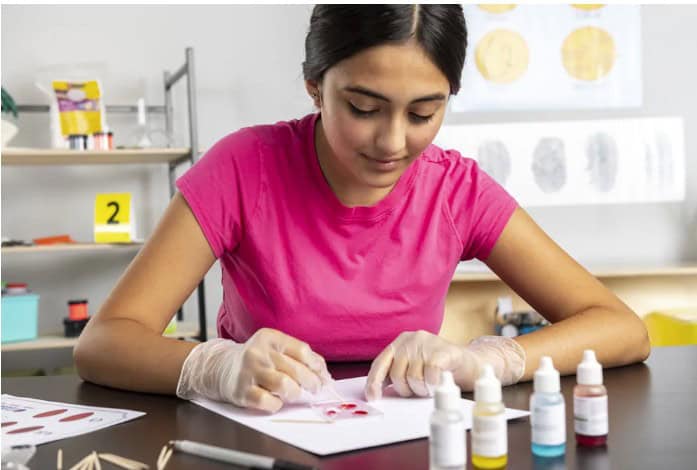
To introduce forensic science, use a forensic kit as a solid foundation to help students better understand the subject. This full course immerses them in a series of “whodunnit” scenarios such as a classroom break-in, an interrogation, and a vending machine caper. They will have to use forensic equipment and apply problem-solving skills to find evidence during these scenarios.
Other activities include fingerprinting, working with simulated blood patterns, fabric testing, plaster casts, and more. To make the scenarios more immersive and challenging, use fetal pigs as victim stand-ins. This one activity can spark students’ interest and prepare them for deeper investigations.
Here are some more ideas for exploring forensic science careers with your students:
Forensic pathology
It’s important for students to accurately assess even the subtlest traces of evidence. One wrong cut or action from a medical examiner could mean a criminal walks free in our legal system.
This type of high-stakes dissection can be stressful, and sometimes experts make mistakes. Students need to understand how challenging it really can be to discover a cause of death.
During this experiment, three preserved fetal pigs represent victims with stab wounds, gunshot wounds, and a broken back. Students must use the scientific method in real-life applications as they investigate the demise of these three little pigs. They dissect and remove each internal organ, examining its color, size, and other characteristics while documenting everything they observe. They then draw conclusions on whether the death was natural, criminal, or accidental based on the evidence found.
Forensic anthropology
In forensic anthropology, students examine compromised human remains or skeletons to find answers to questions. Forensic anthropologists working in the field can examine human skeletal remains and their surroundings to determine who died, how they died, and how long ago they died.
While students won’t be dissecting human cadavers or studying real skeletal remains in the classroom, you can give them preserved owl pellets to examine instead. By examining owl pellets, students can develop the same critical thinking, problem-solving, collaboration, and communication skills that forensic anthropologists possess.
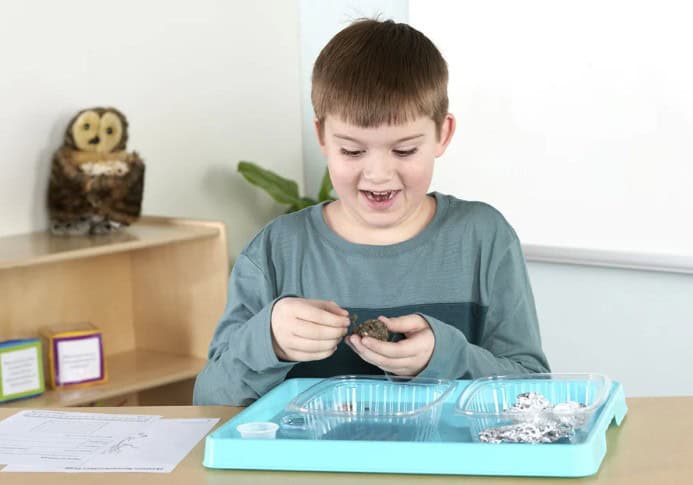
Activity idea: With this owl pellet kit, students will analyze owl pellets and observe skeletal features to identify the prey consumed by owls. They can also conduct studies to evaluate animal populations within the owl’s habitat, make calculations to estimate the biomass of the prey, and more.
Forensic toxicology
Students need to understand that there’s more to dissection than just the dissection itself. Dissection is also observing, taking notes, and being aware of the body systems to know what is and is not supposed to be present. When determining the cause of someone’s death, medical examiners analyze biological samples for the presence of toxins from drugs, alcohol, or poison. These biological samples may include urine, hair, blood samples, and more.
If a medical examiner is unaware of what substance is inside someone, they might need to test to determine whether it’s normal and, if so, whether the quantity is normal or exceeds the permissible level.
Activity idea: While in the lab, give students this toxicology kit to gain knowledge of how over-the-counter drugs, controlled drugs, and illegal drugs may act as toxins in the body. Students will perform presumptive chemical tests on drugs and poisons, identify unknown samples based on chemical test results, and examine urine for evidence of heavy metal poisoning using chromatography.
With this other toxicology kit, students can use different techniques to determine the presence of alcohol, drugs, and pain medication in simulated urine samples. Students can apply the skills they’ve learned from dissection during this activity and make the connections between dissecting and toxicology.
What students can learn about forensic science as they dissect
When you connect forensic science careers to dissection, students will be able to connect your lessons to real-world career applications and opportunities.
As they apply a variety of skills to identify victims and prosecute criminals through the activities above, it’s important to give students the valuable hands-on learning experience of dissection so they can make those career connections and be on a pathway to future success.


Leave a Reply