
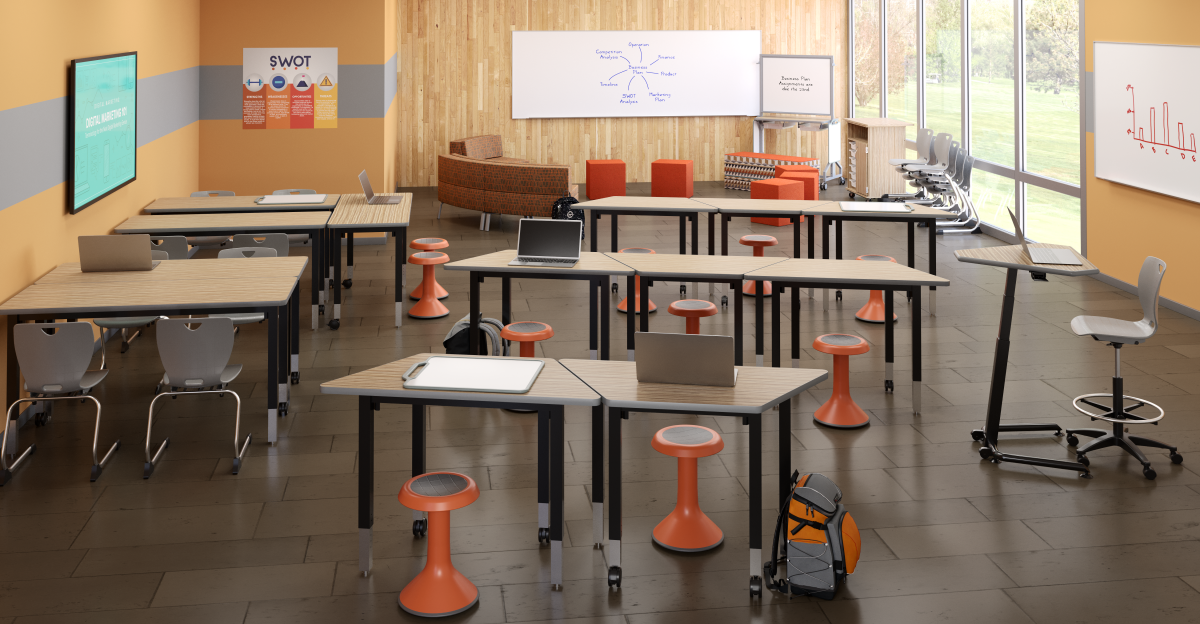
After starting with purpose, the next step is bringing that vision to life in classrooms that can support a wide range of instructional needs. Flexibility plays a key role in helping spaces respond to different learning moments throughout the day, from whole-group instruction to collaboration and independent work.
Table of contents
- Flexible, Not Chaotic: How to Build Classrooms That Adapt to Any Lesson
- What Flexibility Actually Means (and What It Doesn’t)
- The Power of Learning Zones
- Furniture That Works With You, Not Against You
- Movement Needs Structure to Succeed
- Starting Small and Building Together
- Designing for Adaptability, Not Just Aesthetics
This installment of The Principal’s Guide to Building Classrooms That Work Today focuses on how to design classrooms that support adaptability with clarity and intention. We’ll explore how to structure movement, organize learning zones, and choose furniture that works in service of instruction, so classrooms can consistently support how students learn and teachers teach.
Flexible, Not Chaotic: How to Build Classrooms That Adapt to Any Lesson
Walk into two classrooms labeled “flexible,” and you might have very different experiences. In one, students move with purpose—shifting from discussion to collaboration to independent work with minimal disruption. In the other, the same movement feels less connected, with transitions taking longer than the learning itself. The difference isn’t just the furniture. It’s the design and intent behind it; the wrong furniture can cause friction between instruction and the environment.
Flexibility, when done well, is one of the most effective ways to support engagement and attention. It expands what’s possible instructionally and gives students more ways to connect with their learning. But flexibility is often misunderstood as something informal or unstructured. In reality, the most effective flexible classrooms are carefully designed environments where movement, choice, and layout all work to support learning.
What Flexibility Actually Means (and What It Doesn’t)
The idea of a “flexible classroom” is often reduced to seating—standing desks, soft chairs, or a few alternative options around the room. But flexibility is really about how a space functions over time to meet the diverse needs of every learner.
This approach aligns closely with Universal Design for Learning (UDL), a framework aimed at optimizing teaching and student success by removing barriers to learning. UDL suggests that because students learn in different ways, classrooms must provide:
- Multiple means of engagement: Tapping into learners’ interests and offering choices in the learning environment
- Multiple means of representation: Presenting information in different formats
- Multiple means of action and expression: Allowing students to show what they know in ways that work best for them
Design Researcher Lennie Scott-Webber describes three types of learning environments: fixed, flexible, and fluid. A fixed classroom rarely changes. A flexible one allows for some rearrangement, typically directed by the teacher. A fluid classroom goes further, enabling both teachers and students to quickly adapt the space to match the learning moment.
That’s where many schools are headed: classrooms that can shift seamlessly from whole-group instruction to partner work to independent reflection. But fluid doesn’t mean unstructured. Without clear expectations, even well-designed spaces can become distracting. The goal is structured flexibility where every option available to students connects directly to how they are learning.
The Power of Learning Zones
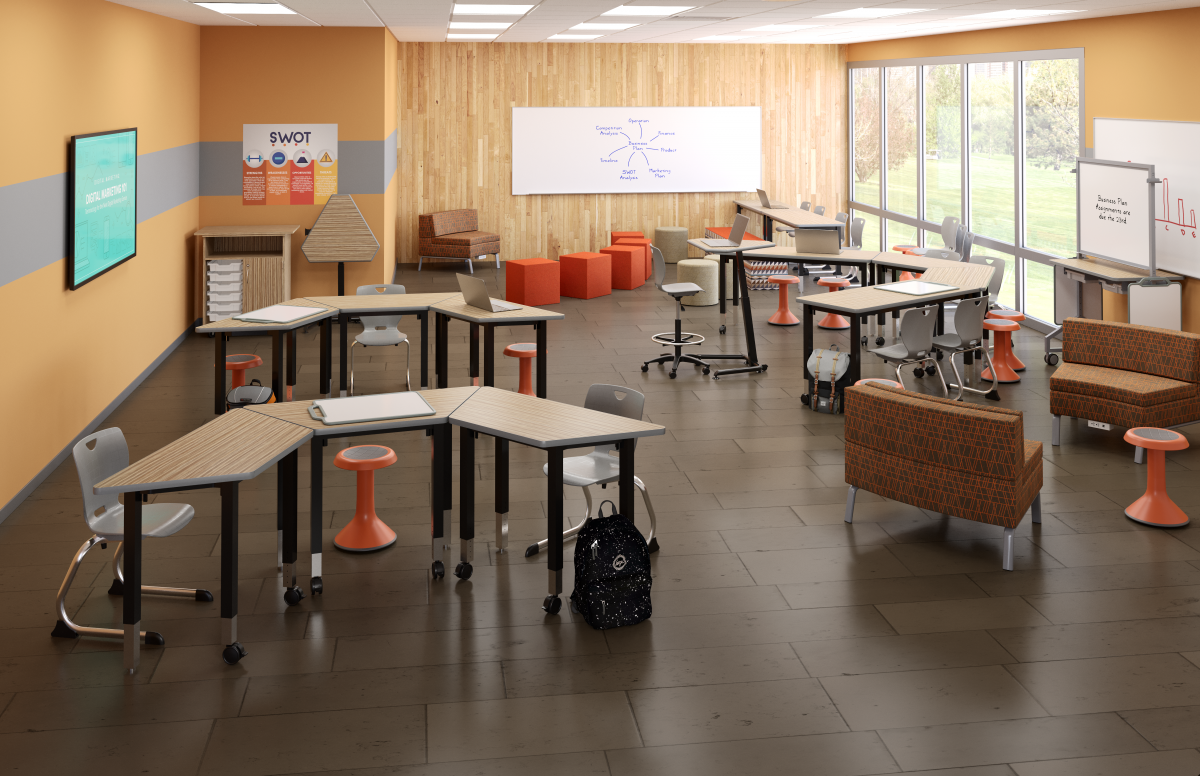
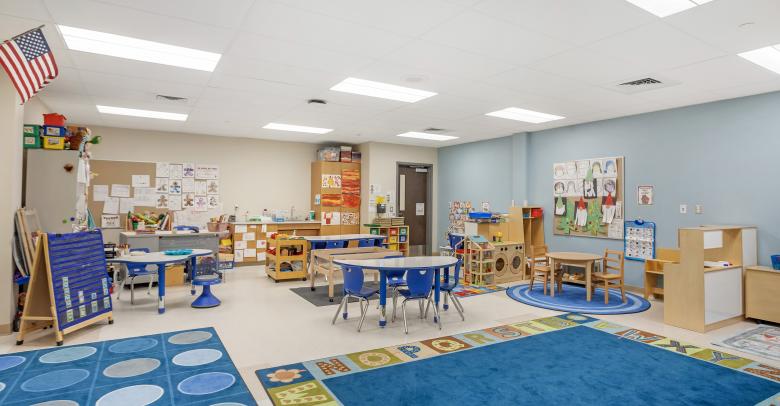
One of the most practical ways to bring structure to flexibility is by organizing classrooms into clearly defined learning zones. Rather than relying on a single static layout to support every activity, the room becomes a fluid environment that can adapt throughout the school day to meet changing instructional needs.
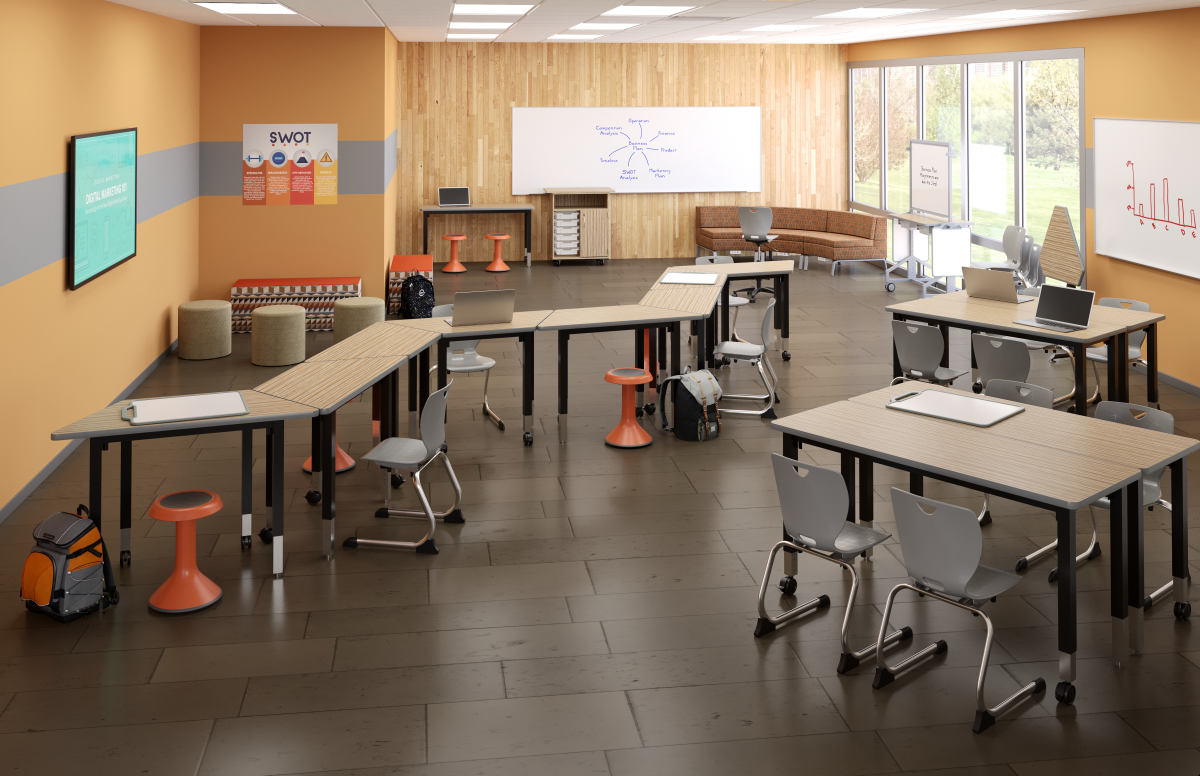
Effective learning spaces are designed with flexibility in mind, allowing zones to shift and evolve as students move between direct instruction, collaboration, independent work, and discussion. Mobile furniture, easily reconfigured seating, and intentional layouts help teachers transition seamlessly between activities without disrupting the flow of learning.
Most successful classrooms include a space for teacher-led instruction and discussion, an area where students can present or share their thinking, and dedicated spaces for both collaboration and focused independent work. Some classrooms also incorporate a quieter corner for reflection or resetting, helping students regulate emotions, regain focus, and recharge when needed.
Many teachers also find success with a “home base,” a consistent place where students begin and end their day. This creates familiarity and routine while still allowing the broader classroom environment to remain dynamic and adaptable.
These zones do not need to be elaborate. What matters most is clarity of purpose and the flexibility to support multiple learning experiences throughout the day. When students understand how each space functions and the environment can shift naturally alongside instruction, transitions become smoother, expectations become more consistent, and the classroom develops a rhythm that supports both engagement and learning.
Furniture That Works With You, Not Against You
Flexible classrooms depend on furniture that can keep up with the pace of instruction. Pieces that are too rigid or too difficult to move can quietly limit what’s possible, even in a well-designed room.
The most effective environments tend to include:
- Mobile pieces that can be easily rearranged without interrupting learning
- Durable materials that hold up to frequent movement and daily use
- Multi-purpose design so a single piece can support different learning activities
Storage also plays an important role. When materials are easy to access and put away, transitions between activities feel intentional rather than disruptive.
Look for providers that offer furniture and classroom solutions designed with this kind of adaptability in mind—helping schools create spaces that evolve with instruction rather than needing constant replacement.
Movement Needs Structure to Succeed
One of the most common concerns around flexible classrooms is the potential for distraction. In practice, movement becomes productive when it’s taught and reinforced like any other classroom routine.
Students need to understand how to use the space. That includes knowing when it’s appropriate to move, how many students can be in a given area, and what each zone is designed to support. Visual cues like schedules, timers, or attention signals help reinforce those expectations without interrupting instruction.
Creating a sense of stability while still allowing for flexibility throughout lessons help the classroom feel both dynamic and predictable.
Starting Small and Building Together
Shifting to a more flexible classroom model doesn’t require a full redesign overnight. Some of the most successful approaches begin with a small group of teachers working together to test and refine what works.
When educators collaborate—sharing observations, adjusting layouts, and learning from one another—the results tend to be more sustainable. It also builds shared confidence, which is essential when expanding those practices across a school.
Research from John Hattie highlights collective teacher efficacy as one of the strongest influences on student achievement. Flexible classroom design, when approached collaboratively, can contribute to that shared sense of impact.
Designing for Adaptability, Not Just Aesthetics
At its core, a flexible classroom is defined by form follows function. Thoughtful design expands instructional options, allowing the environment to adjust quietly and efficiently to the needs of any lesson. When flexibility is grounded in purpose, it ceases to be a novelty and becomes a reliable engine for daily learning.
Looking for information on why planning is such a crucial step and how to do it effectively? Looking for information on how to best support your diverse learners? The entire The Principal’s Guide to Building Classrooms That Work Today Blog Series has every angle covered.

Leave a Reply