
Table of contents
Art Is Not Separate From Learning
When school budgets tighten and academic pressure rises, art is often one of the first subjects cut. Too often, art is treated as a luxury, a pleasant elective, or a creative break from “real” learning. But research and classroom experience tell a very different story. Art is not separate from learning. Art is learning.
The conversation about art education needs to move beyond whether students should have access to a standalone art class. Of course they should. But the bigger question is this: why are we limiting art to one classroom or one hour of the week?
Art should not exist only as a separate subject. It should be woven throughout education because art helps students understand, remember, and engage with everything they learn. For many students, learning becomes meaningful when it is experienced rather than memorized, and art provides that experience.
Research consistently shows that arts education is linked with stronger academic and developmental outcomes. The National Endowment for the Arts reports that arts education is closely connected to positive academic achievement and social and emotional development. Rather than serving as a distraction from core subjects, art helps students build the very skills schools say they value most: critical thinking, communication, creativity, collaboration, and problem-solving.
That matters because learning is not a one-size-fits-all process. Traditional classrooms often prioritize reading, writing, and testing while assuming students learn best through listening and memorization. Yet many students absorb information more effectively through visual, hands-on, and creative experiences. Art opens those pathways and allows more students to connect with what they are learning.
How Art Helps Students Learn
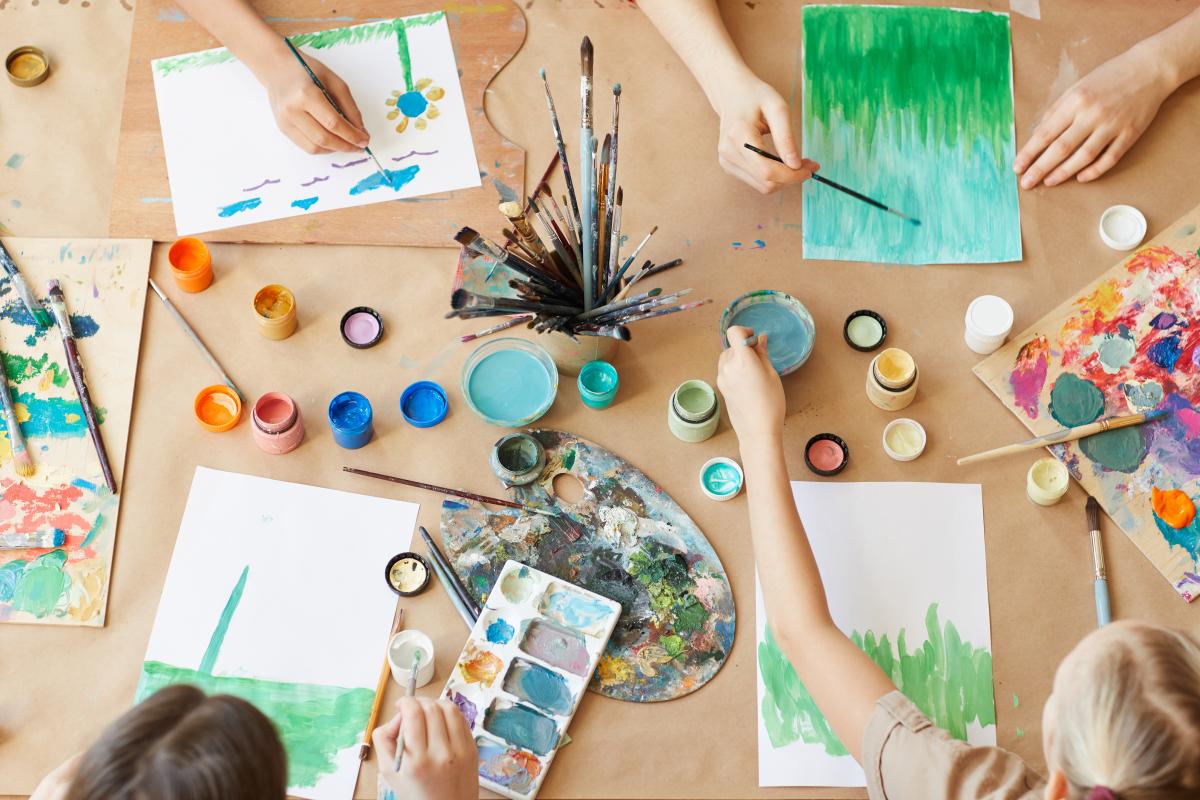
Think about a science lesson. A student may struggle to remember the stages of cell division from a textbook paragraph. But ask that same student to sketch the process, create a visual diagram, or dramatize it through movement and discussion, and suddenly the information becomes concrete. Art transforms abstract ideas into memorable experiences.
This is not simply a theory. Research on arts-based learning has shown that students often perform better academically when art is incorporated into the learning process. A large-scale study led by researchers at Texas A&M University and supported by the National Endowment for the Arts examined more than 10,000 students in Houston-area schools. The results were significant: students exposed to expanded arts education showed improvements in writing achievement, greater school engagement, stronger compassion and empathy, and fewer disciplinary infractions.
Additional analysis of the same Houston study found that arts learning increased writing scores, boosted emotional engagement, and reduced behavior problems without harming performance in other academic areas. These findings challenge the outdated assumption that art competes with academic learning. In reality, art strengthens it.
Part of the reason lies in how the brain learns. Artistic activities engage multiple senses at once. Drawing, movement, storytelling, music, and design combine visual, auditory, and hands-on learning. When students use multiple pathways to process information, retention improves. Rather than passively receiving facts, students actively build knowledge.
Anyone who has tried to memorize dates from a history textbook knows how quickly information can slip away when learning feels disconnected. But imagine students designing historical posters, performing dramatic reenactments, composing songs about historical events, or illustrating primary-source narratives. Suddenly, history is not just remembered, it is understood.
Art Belongs in Every Subject
Research supports this kind of arts integration. A Texas A&M study found that teaching history through theater positively impacted student learning outcomes, suggesting that arts-integrated instruction can deepen understanding and improve educational results across disciplines.
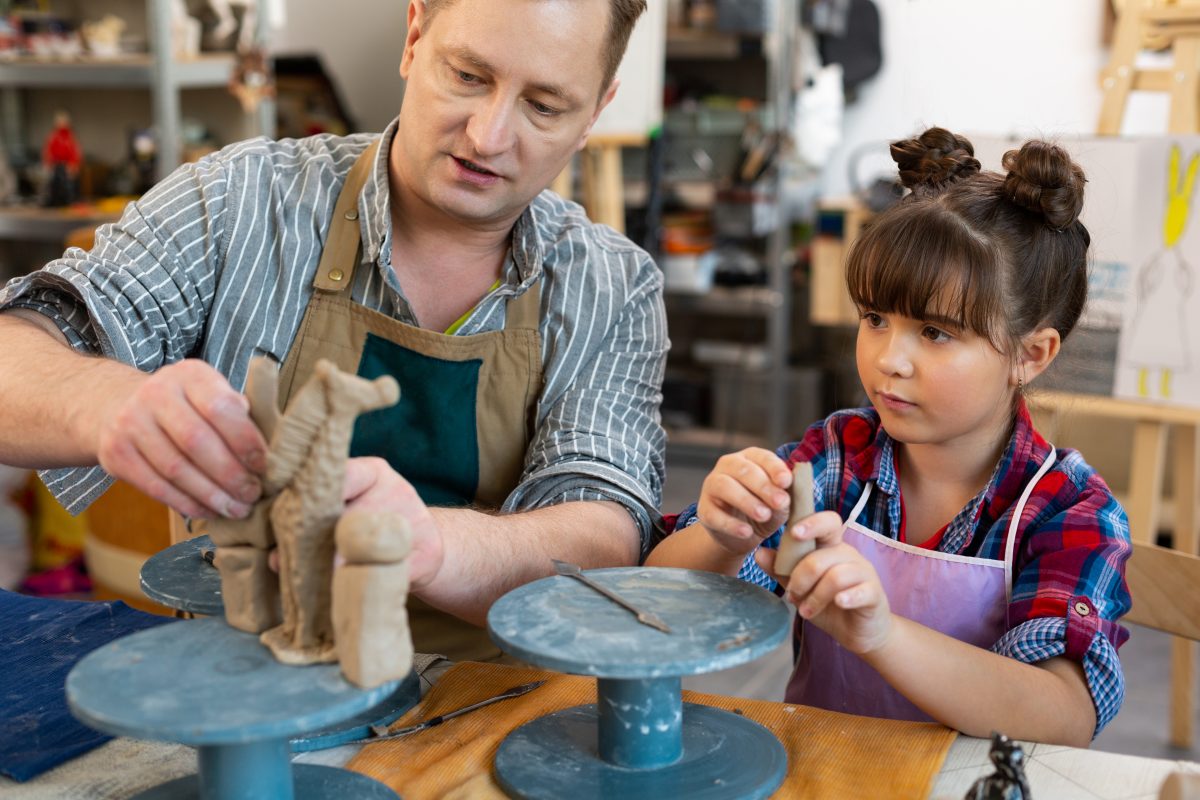
The same principle applies to mathematics. Math and art are often treated as opposites, yet they are deeply connected. Pattern, symmetry, proportion, geometry, and spatial reasoning sit at the center of both disciplines. Students can explore fractions through music, geometry through design, and measurement through sculpture or architecture. When math becomes visual and tactile, many students who once feared the subject begin to see its logic and beauty.
Language arts also benefit enormously from arts integration. Writing becomes more powerful when paired with illustration, theater, storytelling, or digital media creation. Students who perform literature or visually interpret themes often develop deeper reading comprehension and a stronger emotional connection to texts. Art allows students not merely to analyze stories but to inhabit them.
This approach is not about replacing traditional teaching methods. Reading, writing, and direct instruction remain essential. Rather, arts integration expands the teacher’s toolbox and provides additional pathways into learning. Students are more likely to understand difficult concepts when they can see them, build them, perform them, or create them.
Art Builds Engagement and Confidence
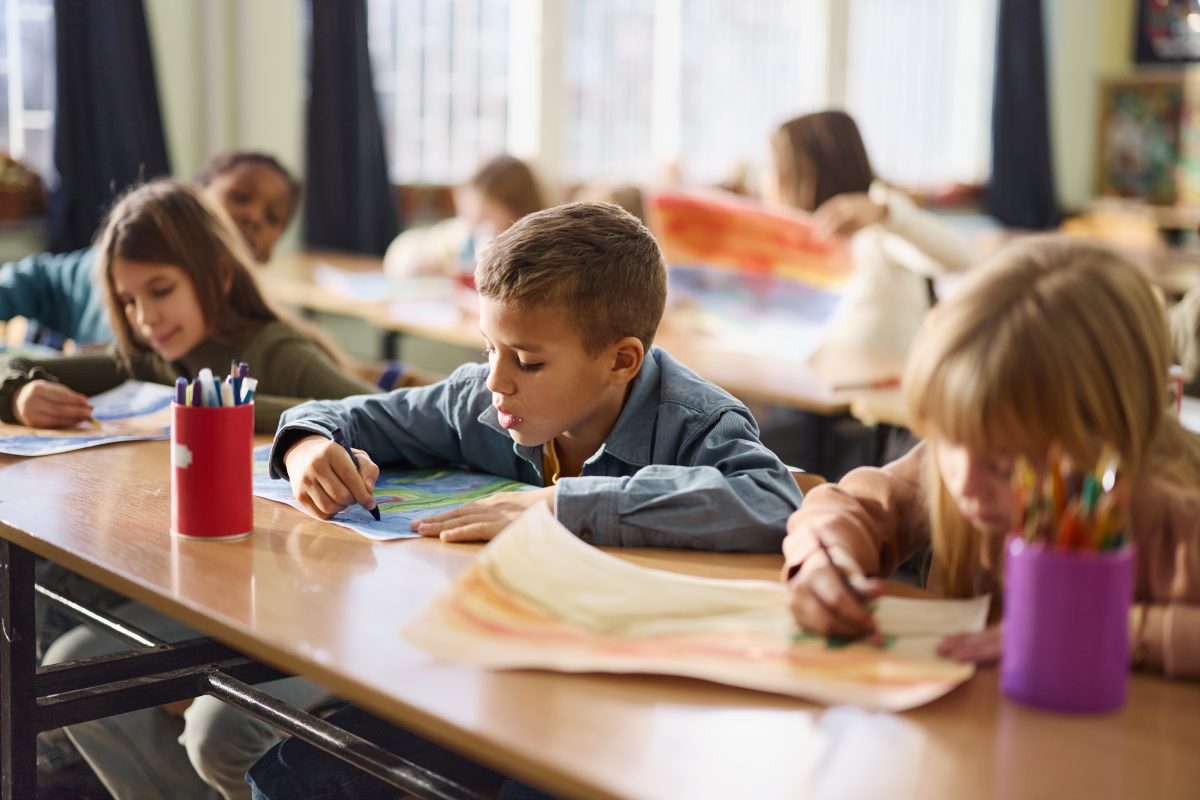
One of the greatest challenges educators face is not intelligence but disengagement. Students who feel disconnected from school often stop participating, stop taking risks, and eventually stop believing they can succeed. The arts help reverse that pattern.
Research from the Houston arts education study found measurable increases in school engagement and empathy among participating students. Students became more invested in learning and experienced meaningful social-emotional growth alongside academic gains.
This is especially important for students who may not thrive in traditional settings. For some children, art becomes the bridge that reconnects them to learning. A student who struggles with lectures may shine through visual projects. A reluctant reader may discover confidence through theater, or a quiet child may finally find a voice through music or design.
The National Endowment for the Arts has also documented connections between arts participation and emotional development, noting that arts education supports resilience, empathy, emotional regulation, and social growth.
Preparing Students for the Future
The benefits of art extend beyond grades and test scores. The modern workforce increasingly values creativity, innovation, and adaptability. Yet schools often claim to value creativity while limiting the very experiences that develop it.
The Organization for Economic Cooperation and Development (OECD), which oversees international education research and assessments, identifies creativity and critical thinking as essential skills for modern societies and economies. Their research argues that these abilities should be cultivated throughout learning rather than isolated to electives or special programs.
The OECD has gone further by developing classroom frameworks specifically designed to help teachers foster creativity and critical thinking across all subject areas.
Creativity is not an accident; it is practiced. When students make artistic choices, solve design problems, revise their work, and communicate ideas visually or emotionally, they develop habits of thinking that serve them in every field, from engineering and medicine to business and technology.
Schools Cannot Afford to Teach Without Art
This is why the debate should no longer center on whether schools can afford art. The real question is whether schools can afford to teach without it.
Art should remain a dedicated subject taught by skilled educators who help students explore artistic technique and expression, but art should also move beyond the art room and become part of daily instruction across subjects. A science classroom should welcome drawing and design. A history classroom should embrace storytelling and performance. A math classroom should explore patterns and visual reasoning. An English classroom should invite creative interpretation and expression.
When art becomes integrated into learning rather than isolated from it, students gain more than artistic skill. They gain a deeper understanding, stronger memory, increased engagement, and the confidence to think creatively.
Education should not be about filling students with information they quickly forget. It should be about helping them make meaning. Art does exactly that. It is not an extra or a distraction from learning; it is one of the most powerful ways learning happens.

Leave a Reply