
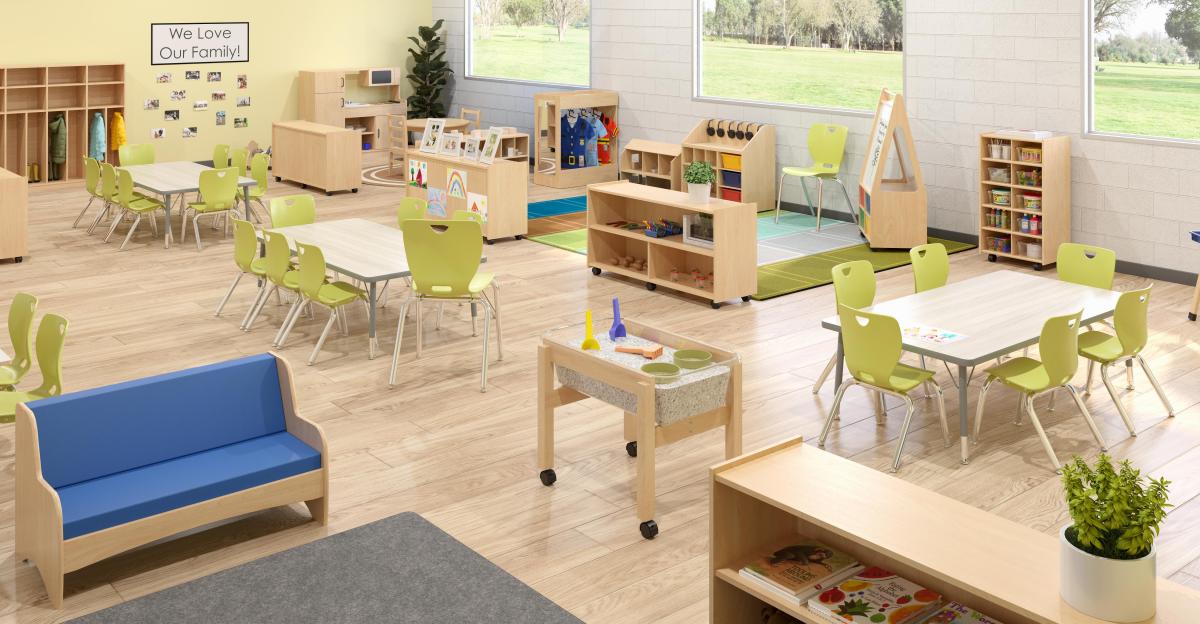
Small, intentional changes to your classroom environment can make a big difference for young students who arrive with a variety of needs.
Every day young learners come to school in varying states of mind. Some are regulated and ready to learn. Others may bring worries, frustrations, or other big feelings. Busy family schedules, too much screen time, and a variety of other external factors will follow them through the classroom door, affecting how their school day may play out.
Each child may exhibit big feelings in different ways. One child may internalize their feelings, appearing shutdown, shy or quiet. Another student may externalize their emotions as noted by crying, aggression, or nervousness.
You cannot control what happens before the school day begins, but you can control what type of environment you provide once they walk through the door of your classroom. Creating a welcoming, comfortable space helps children feel emotionally safe and ready to learn. Let’s explore some ways to accomplish that goal.
Start With Intentionality
With the needs of each child in mind, intentionally creating a classroom environment that addresses those needs helps set the stage for success.
Integrate active learning. Young learners need physical activity, and expecting children to sit still for long periods of time doesn’t align with developmentally appropriate practice. Providing wiggle cushions or motion stools can meet the need for movement and be helpful tools to increase attention span. Adding a gross motor center in the classroom or having a scheduled time for music and movement are other means of integrating active learning throughout the daily routine.
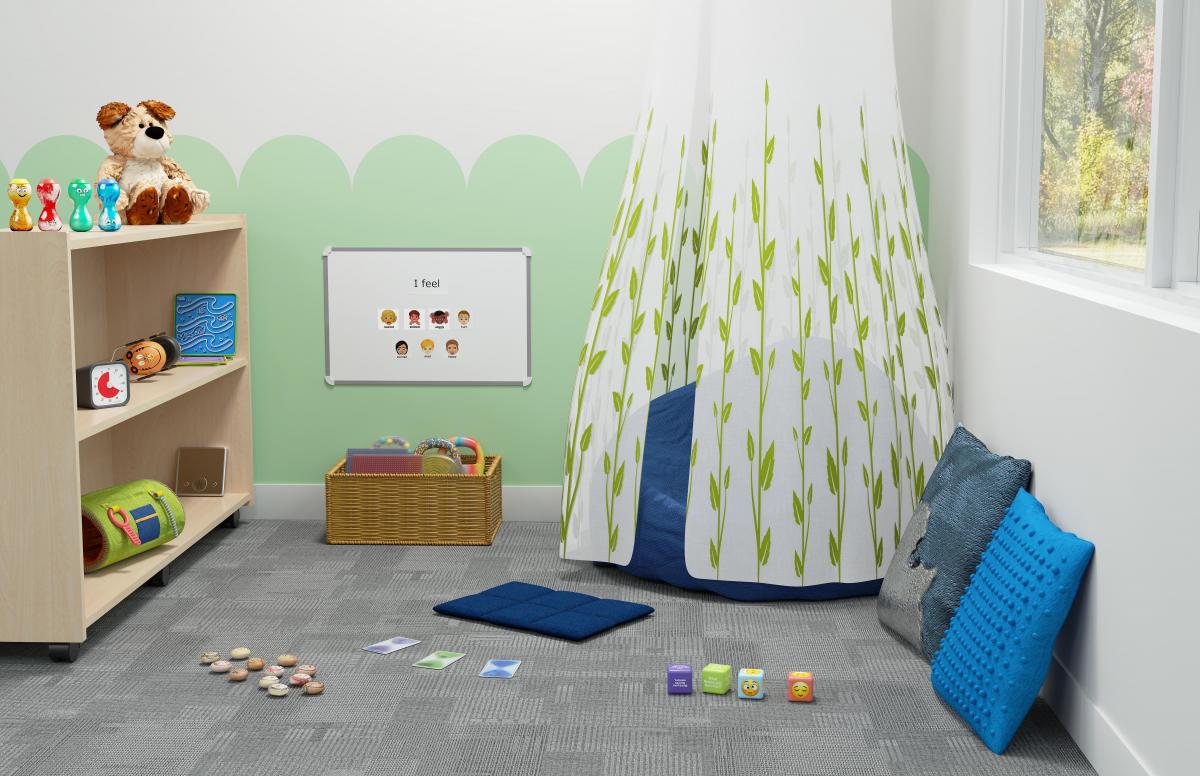
Create a calming corner. Finding a quiet corner of the classroom and creating a comfortable and inviting space where children can feel psychologically safe to self-regulate when needed is a must-have.
A few suggestions for creating a calming corner:
- A beanbag chair, a few pillows or a soft floor cushion
- Tools to support breathing techniques
- A small basket with fidgets
- Simple books and visuals to help identify feelings
- Child-sized noise-reducing headphones
The key is making it an inviting area that is equipped with tools that support handling emotions, provides choices to regulate, and offers materials for calming.
Post a visual schedule. Knowing that most young children cannot yet read, the use of pictures is a very effective strategy to help children visualize what will be happening during their school day. Creating simple icons or using photos of students engaged in the various parts of the daily routine are easy ways to create a visual schedule. Posting it at children’s eye level and hanging it with clips or in a pocket chart so it can be easily rearranged when there are changes in the schedule are practical tips as well. Lastly, reviewing it frequently gives children a sense of security and control over their day.
Teach How to Use the Environment
Even the best-designed room won’t be helpful if students don’t understand how to utilize all the tools at their disposal. Introducing all classroom areas or new learning materials, modeling their use and then allowing children to practice using them are over-looked techniques that ensure appropriate and effective use. Also, this is not a one-and-done strategy. Periodically revisiting this information with children will help with successful usage of all areas and materials throughout the school year.
Knowing that children learn with predictability and structure, it is important to keep the room arrangement consistent throughout the year. Of course, small tweaks will need to be made based on observation of what works best for your students, and adding a little novelty here and there keeps children interested and excited about school. That said, major rearrangements shouldn’t need to happen frequently throughout the year.
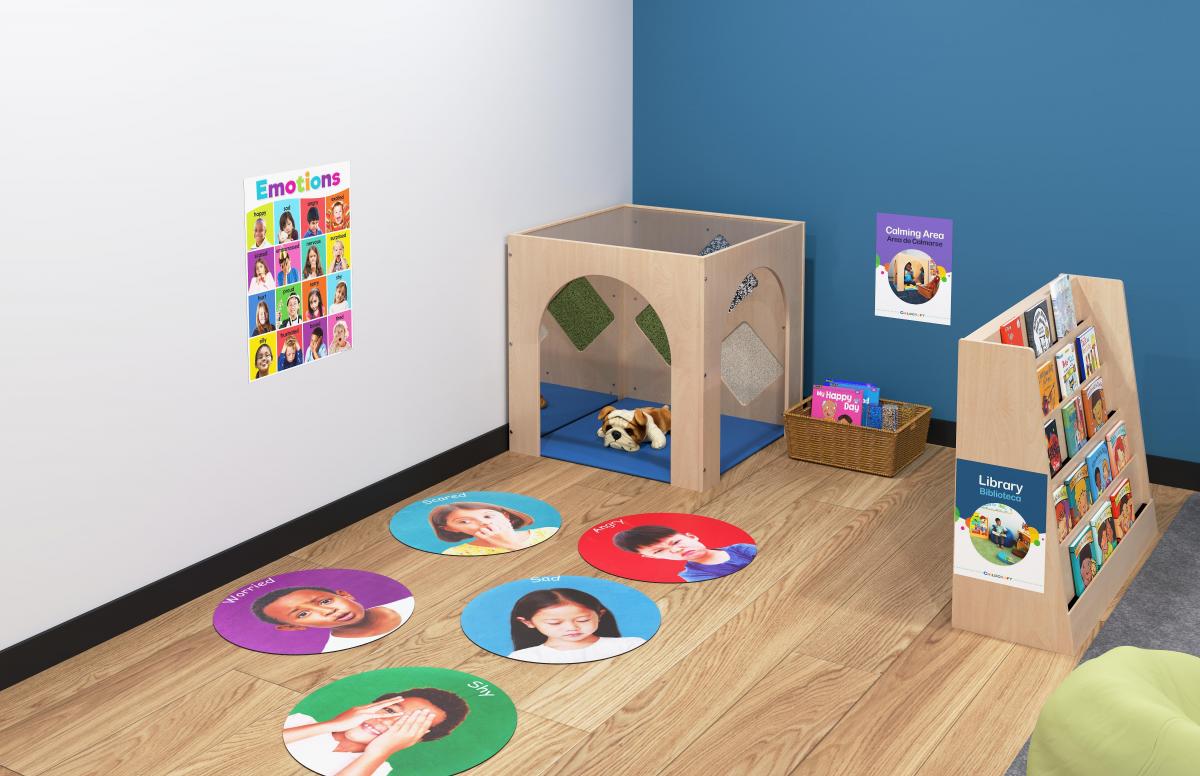
Keep Children’s Perspectives at the Forefront
As schools vie for enrollment, trends are developing to create “wow” factors for families as they enter early childhood environments. Over-the-top thematic rooms with overstimulating displays may look amazing at first glance but ultimately may not be what is best for the young children who use the environments.
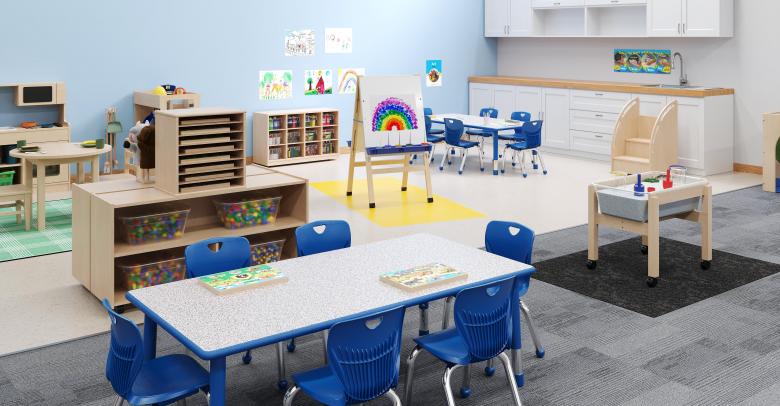
Keeping in mind how children learn best and what is developmentally appropriate should be at the forefront of decisions on classroom design. Keeping open sightlines, minimizing runways, and including child-sized furniture are all means to this end.
Reduce Visual Distraction
Typically, when we think of early childhood classrooms, bright primary colors, like a fresh new box of crayons, pop into our minds. We also may envision a room with bulletin boards and walls covered in artwork. The goal was making the room look fun, but for a child who is already overwhelmed, all that visual distraction can be a barrier to learning.
A few low-cost changes can make a big difference:
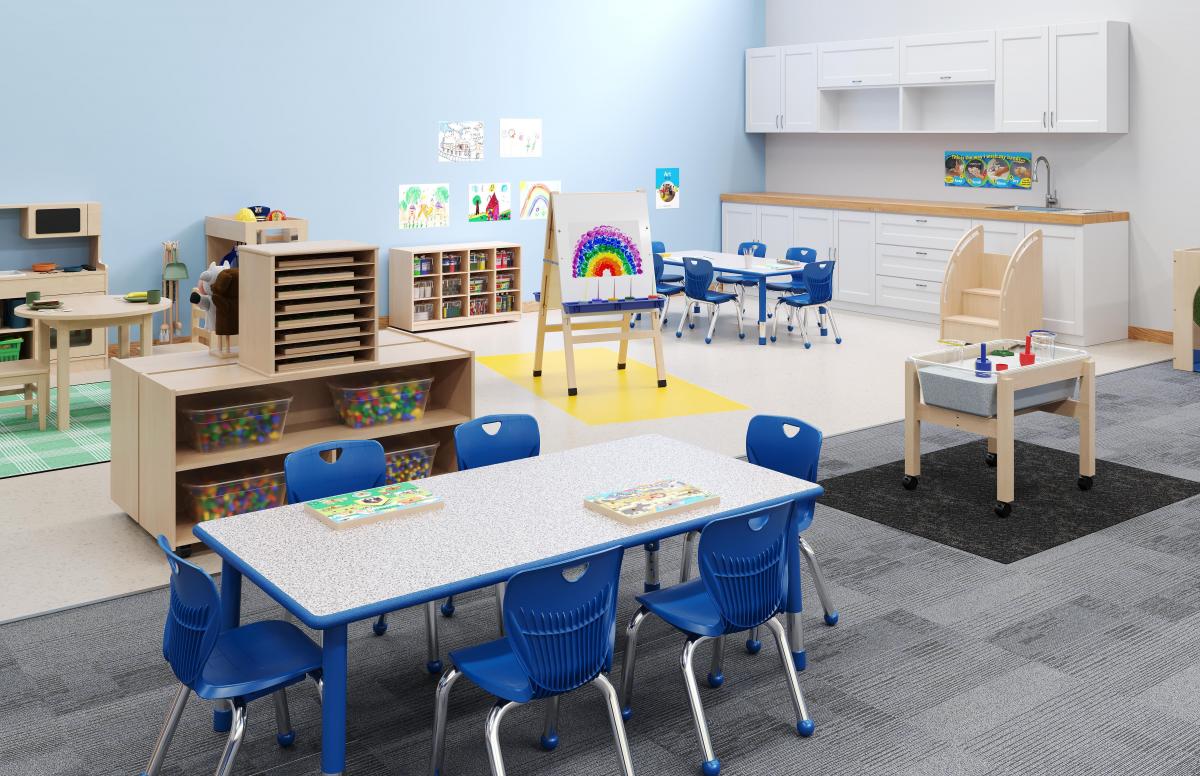
Soften your palette. Neutral and natural tones create a calm foundation knowing the room will soon become colorful with student work on the walls and shelves full of learning materials.
Rethink storage. Clear bins and natural baskets are a simple replacement for rainbow colored plastic bins used throughout the room.
Dial back classroom décor. Assess what is really necessary to hang on classroom walls. Giving priority to student work or pictorial supports can help with this task.
Assess your lighting. Research suggests that natural and soft light can help lower stress and calm the environment. If harsh overhead fluorescent fixtures are your only option, try switching some of them off or adding light filters. Utilizing some small lamps is another suggestion.
Use furniture to guide movement. Low shelves, carpets, and other furniture pieces can delineate traffic patterns and help create boundaries for learning areas in a classroom. They provide a visual guide for children to more smoothly navigate the classroom.
A Calmer Room is Easier on You Too
Classroom design isn’t only about students. Studies on early childhood teachers link burnout to environmental strain and the daily work of managing behavior challenges. Your space should be working with you, not against you.
When your space is working with you, there is increased time to connect with students rather than redirect students. More time can be spent fostering students’ independence rather than doing everything for them. Teacher collaboration and planning opportunities are optimized as well.
Lastly, don’t forget your own needs. Taking care of yourself so you can care for others is a lesson we often forget. Having a clean, organized, soothing classroom helps your morale as much as it does your students’ well-being.
Where to Start This Week
You don’t need a big budget or a full room makeover. Pick one or two of these suggestions and go from there:
- Assess your classroom wall space with the goal of removing a few unnecessary or no-longer-used items.
- Bring in a lamp or open window shades to let in any natural light.
- Create or refresh a calming corner and model how to use it with your students.
- Add or update a picture schedule.
- Choose one area of the room to declutter and reorganize.
The most effective early childhood classrooms aren’t the fanciest. Being intentional in creating a classroom that meets the needs of all children is the ultimate goal. Doing so not only provides the best learning environment for your students but supports you in the work you do for our youngest learners.

Jennifer Fernandez
Jennifer has over 30 years of experience in education. She has degrees in Elementary Education, Spanish, and Bilingual Education and holds teaching licenses in Texas and Minnesota. She has taught PreK-2nd grade in general and bilingual settings, served as a professional learning specialist for seven years, and currently presents at state and national conferences.
Read more by Jennifer Fernandez–>

Lynnette Cornett
Lynnette has a Master of Educational leadership with certifications of Special Education Director and Building Principal PK-12. She served as a special education teacher and 8 years as Special Education Director in Missouri. Lynnette is a passionate advocate of students with disabilities. She cultivates problem solving among special educators and encourages out of the box thinking to meet the individualized needs of students to promote their fullest protentional in the least restrictive educational setting.

Leave a Reply